
Mike Daisey Claims to Have Breached a Contract with His Audience

1. A monloguist named Mike Daisey performed a very successful show, “The Agony and Ecstasy of Steve Jobs” which purports to be, in part, an account of his trip to China to investigate conditions at the factories at which Apple products are manufactured.
2. Ira Glass, host and creator of my favorite radio program, “This American Life” was impressed by Daisey’s show and decided to devote an entire episode of “This American Life” to the part of Daisey’s monologue that seems to be a piece of investigative reporting.
3. After being alerted to factual errors in Mr. Daisey’s monologue, This American Life devoted another entire episode to a retraction of its report on conditions in Apple’s factories to the extent that the earlier reporting relied on information provided by Mr. Daisey that turned out to be untrue or unreliable. Mr. Daisey agreed to be interviewed in connection with that retraction and the results were pretty ugly. Mr. Daisey admitted to some outright falsehoods, but he defended the larger truths of his work. His mistake, he claimed, was in agreeing to put his monologue on “This American Life,” since it works as theater but not as journalism.
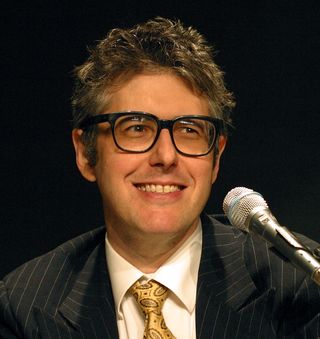
Mike Daisey, who really seems to be unable to abandon the spotlight, continues to give interviews about his monologue and about the revelations of inaccuracies in the monologue. Eerily enough, one of Mr. Daisey’s earlier monologues was about James Frey, whose fake memoir, A Million Little Pieces, famously unraveled (the monologue is called “Truth”). Glass asks Mr. Daisey about that monologue on pages 15 and 16 of the transcript. In that monologue, Daisey had admitted to having fabricated some experiences in order to connect with an audience. Daisey denies that the inaccurancies about his time in China were a result of such a desire to connect. He says, “No, no, because I didn’t, um, no I made a choice to put that, you know, I made a choice to put that detail in that scene, in that way.”
Whatever.
Now, reminded of earlier self-important statements about the importance of truth and praising his own scrpulousness in letting his audiences know when he is reporting true events and when he is making stuff up, Daisey has acknowledged that he did not live up to his own standards. As Daisey puts it on his blog,
When I said onstage that I had personally experienced things I in fact did not, I failed to honor the contract I’d established with my audiences over many years and many shows. In doing so, I not only violated their trust, I also made worse art.
Even in this mode, Daisey is unable to refrain from self-aggrandizement. He did violate a trust and make worse art than his shows could have been if he were capable of honesty. But he did not fail to honor a contract because he never entered into a contract with his audience.
After a series of apologies to the various consituencies who may or may not have been harmed or offended by his transgressions, Daisey concludes by invoking one of his acting teachers and pledging:
I will be humble before the work.
That’s all well and good, but the acting teacher was probably talking about acting in someone else’s play or performing someone else’s script or at least showing humility when working with other performers. When one is in the business of first-person monologues and “the work” at issue is a report on one’s own experiences, before what exactly is one being humble?
Joshua Mehigan describes his poetry as a means of rendering his narcissism palatable. Perhaps that’s what first-person monologues strive for as well. But once the performer becomes thoroughly unpalatable, one is left with a performance of narcissism itself.
[JT]