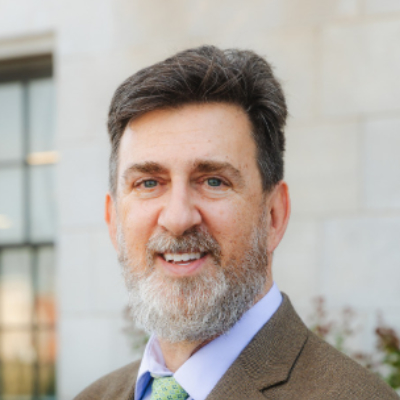
Teaching Assistants: Victor Goldberg, Volume II, An Introduction
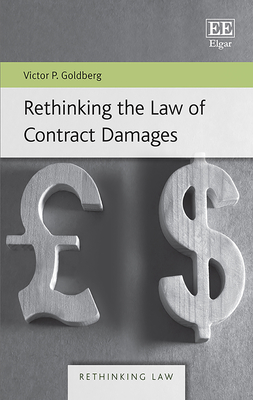
As Professor Goldberg recounts his experience, he started with the assumption that contracts doctrine was efficient. The more he explored the law of damages, however, the more he found that it wasn’t, and he learned that sophisticated attorneys often find themselves having to contract around doctrinal default rules that do not produce efficient results. That would be fine, except that courts are sometimes reluctant to give effect to the parties’ terms, introducing public policy rationales for enforcing inefficient default rules that the parties have rejected.
In part I of RLCB, which covers direct damages, Professor Goldberg regards contracts as creating an option to terminate, contingent on paying damages. Default terms, he discovers, sometimes price that option irrationally, in that the costs. associated with breach bear no relation to the parties’ needs. Part II covers consequential damages. Professor Goldberg revisits his assessment of the “tacit assumption” test (discussed in this previous post), rejected in the UCC but seemingly revived in the UK. The crux of the matter is risk allocation, and the US and the UK diverge on what tacit assumptions parties make regarding risk allocation, and the law of consequential damages in both jurisdictions is off. The result has been under-enforcement of consequential damages, especially in the UK.
I look forward to working my way through this book and sharing a brief summary of Professor Goldberg’s insights with our readers.