
Teaching Assistants: Douglas I. Hodgkin’s Fractured Family
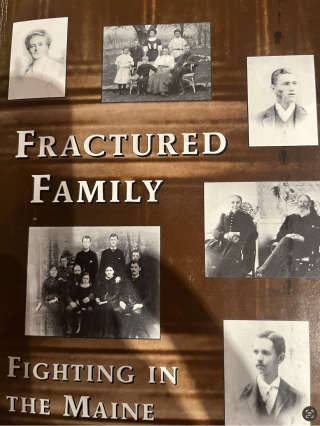
In Fractured Family: Fighting in the Maine Courts, Douglas I. Hodgkin, Professor Emeritus at Bates College, situates the case, a dispute over his great grandmother’s home, within the broader context of a contentious and litigious family. He opens the book with a brief account of the fateful letter that drew the Brackenburys to Maine. He intimates that no court could resolve the conflicts that proceeded from his great-grandmother’s “acerbic personality and her desire to dominate the members of her family.”
The book provides some interesting socio-historical insights. At the turn of the 20th century, it was not unusual for children to settle close to their parents’ home. It was unusual for parents with children to live alone. Youngest children would stay in the family home until marriage, but life expectancy being what it was, parents rarely lived very long after their youngest child left home. But Sarah’s youngest married in 1906, and her husband died in 1911.
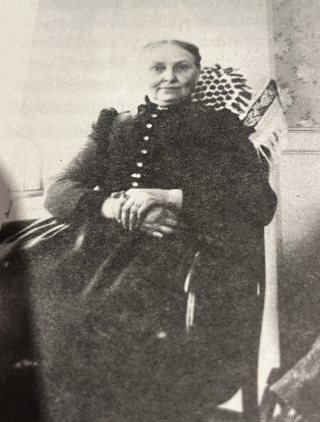
Bertha would not agree to move back to Lewiston until her daughters finished high school. Bertha had other reasons to resist moving back in with her mother. She and her husband had lived with her parents early in their marriage, and it did not go well. Sarah liked to go to bed at sundown, demanding silence while she slept. Sundown in winter in Maine could mean silence from 4:30 PM onward. For years, Sarah made periodic requests that the Brackenburys return to Lewiston, but not until February 8, 1915 did she make the crucial promise that enticed them to come. She scrawled, upside down, above the salutation at the top of a two-page letter, “You to have the place when I have passed away.” The rest of the letter spelled out the remaining rights and obligations of the Brackenburys. There were further exchanges which, if anything, only made the details of the transaction murkier, but the Brackenburys and their three youngest children arrived around May 1, 1915.
Within weeks, the parties fell out. The list of grievances is long. It is clear that the parties engaged in a struggle for control of the household right from the start. Sarah would meddle in the kitchen while Bertha cooked. Joe took liberties with the property, cutting down trees and removing a cedar hedge that Sarah wanted preserved as a windbreak. I’m on Sarah’s side on that one. Sarah went to court already in the Fall and tried to get the court to order the Brackenburys to leave. The court refused. She did get a writ of replevin for the return of a horse and sled that Joe Brackenbury had used and left in town.
In November, 1916, Sarah executed a deed transferring the property to her son Walter for one dollar, reserving to herself a life estate. Walter immediately brought eviction proceedings, and the Brackenbury’s counterclaimed. A trial followed in March 1917, with the court siding with the Brackenburys. On appeal, Maine’s Supreme Judicial Court unanimously affirmed, finding that Sarah’s “temperament and disposition . . . mark her as the provoking cause in the various family difficulties.” Perhaps decisive in the trial court’s determination was Sarah’s demeanor on the witness stand. She often refused to answer questions or answered evasively, resisting the notion that she could be compelled to say anything more than she felt like saying. Walter was ordered to re-convey the deed to his Sarah’s property to her, and he did so.
The family difficulties persisted. There were continued disputes over ownership of the land that Sarah had allocated to her sons. With admirable neutrality, Professor Hodgkin narrates his grandfather Irving’s role in repeatedly having Joe Brackenbury arrested for cutting down trees from the family pastureland. Ultimately, a jury awarded Sarah one cent in damages, plus $44 in fees, as Joe had cut down more wood than he needed to heat the home. After Irving had Joe arrested one more time, Sarah transferred the pastureland to Irving for $1500, depriving Joe of any claim to rights to the timber on the land. It is unclear how Sarah was able to undertake this transaction, when she was supposed to be holding the land in trust for the Brackenburys.

Meanwhile, life in the Hodgkin/Brackenbury home remained unpleasant. According to Irving Hodgkin, food at the dinner table was not passed to Sarah but thrown at her. She ate with an old fork that had only two tines and was fit for the rubbish heap. The Brackenbury children hurled abuse at Sarah. Intervening brothers were threatened with shotguns. There were arrests and more lawsuits. Irving and his brother Russell got into an argument over loose chickens that ended when Irving hit Russell with a rock “in self-defense.” It seems as if the Hodgkin clan was conspiring to help develop the local bar and keep attorneys and courts gainfully employed.
Sarah died early in 1921. Her will was, of course, contested. The Brackenburys sold Sarah’s remaining property, which came to seven acres, and returned to Independence with their younger son.
Professor Hodgkin concludes with a rumination on the limits of what courts can accomplish in disputes such as those involving his ancestors. “[T]he courts could not order the Hodgkins and the Brackenburys to behave themselves.” He chides the courts for an outcome that “compelled them to live together despite their mutual antipathy.” The courts, Professor Hodgkin maintains, “had essentially mandated that the parties remain locked in combat.”
I disagree. The parties had means. They owned land and property. Instead of spending their surpluses on attorneys and court fees, they could have worked out accommodations that involving sharing responsibility for caring for Sarah among her many local relations while compensating the Brackenburys for their trouble with a home of their own, the costs of which would be deducted from Bertha’s eventual inheritance. They remained locked in conflict because they chose conflict. Once Sarah was gone and her estate settled, the conflicts petered out and the family members got on with their lives.