
Are Costco Customers Entitled to Their Share of the Tariff Refunds?
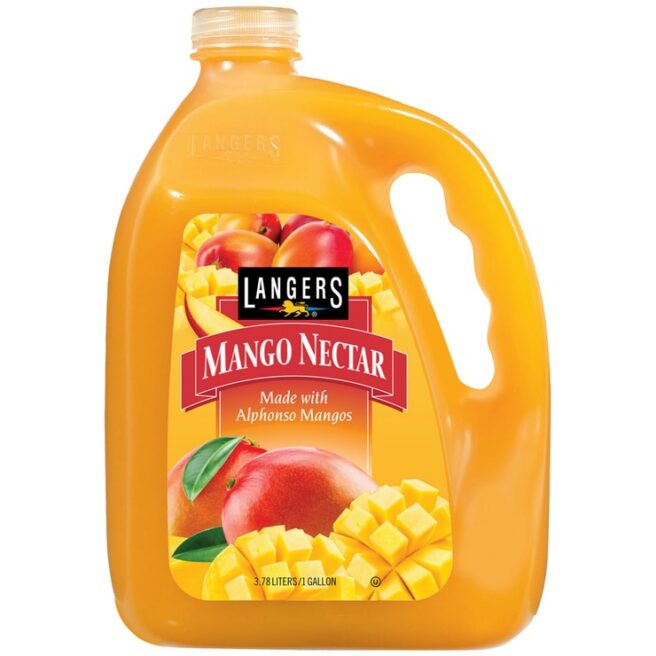
We are empty nesters now. Do we really need eighteen rolls of paper towels or 660 napkins? Well, no, probably not. But we do still need forty or so pounds of cat litter on the regular? Absolutely! Our nest isn’t that empty. And where would I get the mango nectar, without which I likely wouldn’t get out of bed in the morning, if not from Costco?*
And so I was alarmed to read on two of my favorite news sources, Matt Levine’s Money Stuff column (subscription required) and TangleNews, about this purported class action lawsuit brought against Costco. Plaintiffs are demanding that Costco share with its customers any refunds it recovers in its suit against the federal government. Costco is seeking recovery of illegal tariffs collected by the government pursuant to the International Emergency Economic Powers Act (IEEPA). SCOTUS invalidated those tariffs last month in Learning Resources, Inc. v. Trump.
As an irrationally loyal Costco customer, I could potentially benefit from the success of any such class action. On the other hand, as an irrationally loyal Costco customer, I support anything that keeps me in mango nectar, and if letting Costco retain whatever it makes from suing the federal government for illegal tariffs is what it takes to keep me in mango nectar, so be it. Irrationally loyal person that I am, I expect that I will benefit indirectly from lower prices at Costco somewhere down the line, if its suit against the government succeeds. But it is also fine with me if Costco makes a little extra profit so that it can continue to treat its employees well.
Judging by the Complaint in Stockov v. Costco Wholesale Corporation, Mr. Stockov and I differ on the importance of mango nectar. The Complaint cites Costco’s CEO Ron Vachris as pledging that any recovery that Costco receives in its suit against the government would be used to provide “lower prices and better values” to Costco members generally. Works for me. But the Complaint calls this “double recovery,” fears that Costco’s recovery will benefit an indeterminate group of future Costco members, and insists that Costco return to class members all recovery from the illegal IEEPA tariffs. I am a once and future Costco customer, so for me it makes no difference whether Costco passes savings along now or later, and I don’t want Costco’s resources dissipated in defending against the anti-mango-nectar crowd associated with Mr. Stockov.
The Complaint is less than fully convincing. It argues that Costco raised prices in response to tariffs while proclaiming that it would never succumb “to not being the best price.” Costco said both that raising prices was a “last resort” and that it had raised prices in response to tariffs on some of the products it sells. I don’t find it impossible to reconcile these statements.
The Complaint sites an anonymous Reddit user who spent $225 at Costco and noted significant price increases on a number of items. To which I respond, “How did you leave a Costco spending only $225?” An even more persuasive anonymous Facebook user is cited for the proposition that Costco prices had jumped 30% in a month and that the increase in prices at Costco was higher than at most grocery stores. When have anonymous Facebook posts ever steered us wrong?
The complaint alleges violations of consumer fraud statutes, unjust enrichment, and money had and received. Matt Levine opines, without giving legal advice (and I don’t do so either) that it is hard to see how any of plaintiffs’ allegations rise to the level of a cause of action. People went shopping at Costco. They paid the prices that Costco posted. Some complained that the prices were too high and reflected inflation caused by tariffs. But still, they chose to shop of Costco, even when they claimed that the inflation was less marked at Costco’s competitors.
I don’t see any consumer fraud here. Costco never advertised that it would offer customers a refund reflecting recovery from unlawful tariffs. Plaintiffs do not allege that they were misled in any way. They allege that Costco failed to disclose that it would not share any government tariff refund. But why would Costco have a duty to disclose that? Costco had no duty to share the refund so it had no legal obligation to share their intentions with regard to refunds which, by the way, Costco has not yet received. As a result, I see only just enrichment, and I think Costco is likely entitled to keep the money that it has had and received. In the meantime, the claims, unlike the mangoes that go into that delicious nectar, are not ripe.