
Another Unanimous SCOTUS Arbitration Decision
Adrian Jules worked for three years a hotel in Los Angeles. His employer ended his employment in 2020, citing staffing adjustments related to the COVID-19 pandemic, but Mr. Jules sued, alleging discrimination in violation of state and federal law. His employer moved pursuant to § 3 of the Federal Arbitration Act (FAA) to compel arbitration, and the federal District Court granted that motion. The arbitration did not go well for Mr. Jules. The arbiter sided with Mr. Jules’ employer and also imposed sanctions of $34,500 for misconduct, including the failure of Mr. Jules and his attorney to attend the arbitral hearing. When the employer returned to the federal District Court to seek confirmation of the award under § 9 of the FAA, Mr. Jules cross-moved to vacate the award under § 10 of the FAA. As relevant here, Mr. Jules argued that the court had no jurisdiction over the motion, which raised no federal question and did not qualify for diversity jurisdiction.
In Jules v. Andre Balazs Properties, the U.S. Supreme Court (SCOTUS) addressed whether a federal court that has previously stayed claims in a pending action under §3 of the FAA has jurisdiction to confirm or vacate a resulting arbitral award as to those claims under §9 and §10. In a unanimous opinion authored by Justice Sotomayor (below), the Court held that it does. That is so because when the District Court stays the action and compels arbitration, it does not surrender its jurisdiction. It thus has jurisdiction to determine whether an arbitral decision is valid and may be confirmed.
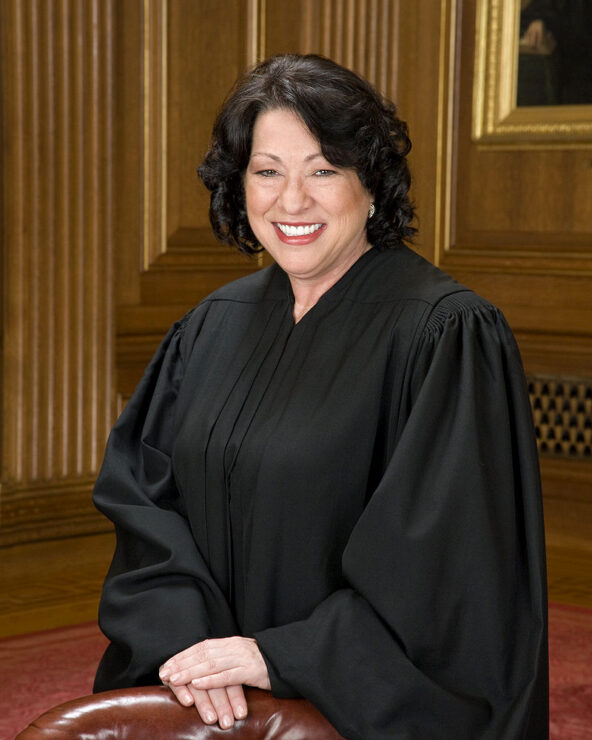
Justice Sotomayor notes that the FAA is an anomaly in that it provides federal standards but is not jurisdictional — that is, a court needs some independent basis outside of the FAA to exercise jurisdiction and grant relief under the FAA. Typically, jurisdiction comes through diversity or in cases that involve an independent federal question other than the FAA. This anomaly might be resolved if the FAA were construed as a purely procedural statute, as it was described in its legislative history. Post-Erie courts determined that the FAA was substantive law but somehow still not the kind of substantive law that creates jurisdiction.
Justice Sotomayor then notes another anomaly from the Vaden v. Discover Bank case from 2009. That case allows courts to “look through” a motion to compel arbitration to determine the nature of the underlying controversy. Federal courts can compel arbitration under the FAA even if there is no federal question or diversity jurisdiction, so long as the controversy between the parties as they have framed it, could be litigated in federal court. I have been trying to write about arbitration for three years, but jurisdictional statements like that one stop me in my tracks. To make matters worse, according to Badgerow v. Walters from 2022, once a case has been decided by an arbiter, federal courts lack jurisdiction to confirm or vacate the arbitral decision. No looking through is permitted in that context for textual reasons. The FAA’s § 4, which governs motions to compel has “save for” language that the sections governing motions to confirm or vacate an arbitral (§§ 9 & 10) lack.
Circuit Courts had split as to whether the Badgerow rule bars federal courts from exercising jurisdiction to decide motions brought §§ 9 or 10 if a court had previously stayed the case under § 3. The Second Circuit joined the Circuit Courts that permit the exercise of jurisdiction, and SCOTUS granted Mr. Jules’ petition for certiorari so that it could settle the Circuit split. Resolving that split did not require any “looking through.” Rather, the District Court properly exercised jurisdiction over the original motion to compel arbitration because Mr. Jules raised questions arising under federal anti-discrimination law. Once the case was stayed, the District Court retained its jurisdiction. It makes sense that the District Court retains that jurisdiction on motions under §§ 9 and 10 because it cannot confirm or vacate the arbitral decision without reviewing how it handled the federal questions in the original case.
I think the case seems pretty easy now, but up until the Court decided Smith v. Spizzirri in 2024, which we discussed here, courts were dismissing cases after compelling arbitration rather than staying them. If SCOTUS had not put the kibosh on that practice, this case would have been more vexing. Courts need to retain jurisdiction for the purpose of reviewing arbitral awards, and thus the FAA’s insistence that matters be stayed rather than dismissed makes sense.
Jules pressed four further arguments, and the Court made quick work of each. First, he tried to read Badgerow as converting the entire FAA into a “reticulated” scheme that requires an independent textual basis for jurisdiction in every §9 or §10 motion. However, Badgerow only foreclosed the look-through method for want of textual support; it never held that every FAA motion needs its own freestanding jurisdictional hook. Not being a determined textualist myself, I did not find this part of the opinion entirely satisfying. I would have preferred a substantive ground for resolving the issue. Second, Jules argued that a §9 or §10 motion is effectively a new lawsuit, not a continuation of the stayed action, pointing to service requirements as proof. The Court disagreed, noting that §3’s mandatory stay exists precisely so parties don’t have to relitigate from scratch, and that even Jules conceded service isn’t always required in this context.
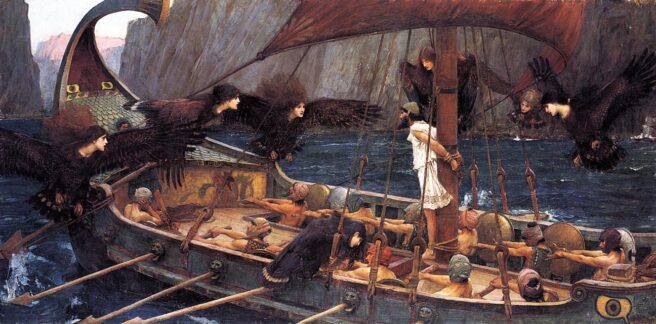
Third, Jules pointed to §8, which spells out jurisdictional rules for a narrow class of admiralty arbitrations. Because §§ 9 & 10 have no such language, Congress must not have intended for them to provide a basis for jurisdiction. It’s the sort of textualist argument that ought to appeal to at least some of the Justices, but Justice Sotomayor swatted it away, stating that Congress having set forth specific procedural rules in §8 for a distinct form of admiralty arbitration doesn’t really tell us anything about §§ 9 & 10. Finally, Jules warned that retained jurisdiction would let parties manufacture a federal forum by structuring their claims accordingly. Justice Sotomayor labels the forum-shopping scheme Jules warned of a “jurisdictional anchor,” as if lashing herself to the mast against the Siren’s song (above) of his previous admiralty argument, which she had just resolved on narrower, less textualist grounds. The Court treated the policy argument as speculative and unsupported by anything in the record.