
Friday Frivolity: Update on the Liberace Piano
Nearly two years ago, we reported on the First Circuit opinion in Gibson Foundation, Inc. v. Norris, a dispute over ownership of a piano formerly owned by Liberace and encrusted with 10,000 rhinestones. In November of last year, the case returned to the First Circuit, leading to a new opinion, also captioned Gibson Foundation, Inc. v. Norris. Here’s the background to the according to Thomas F. Harrison writing for the Courthouse News.
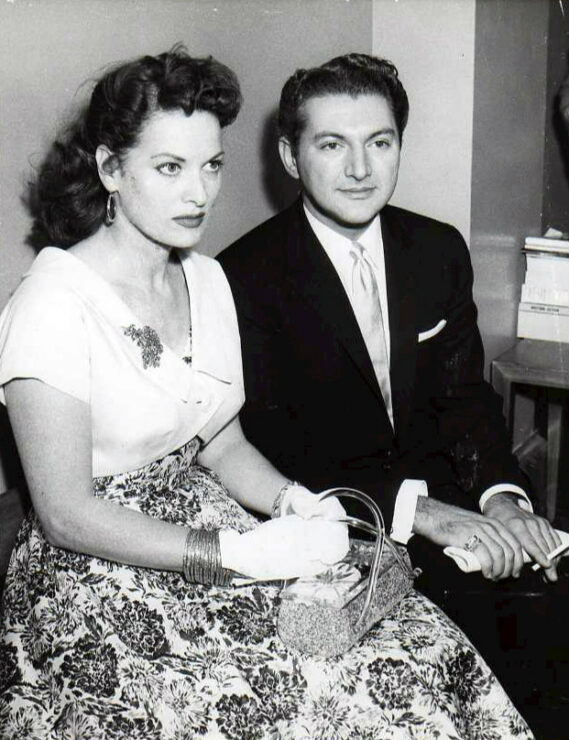
Liberace (right) with actor Maureen O’Hara
Baldwin pianos (Baldwin), owned since 2001 by the Gibson Foundation, Inc. (Gibson), asked Rob Norris to remove a piano made for Liberace from a Manhattan ballroom undergoing renovation. When Baldwin requested that the piano be returned in 2015, Mr. Norris refused, claiming that the piano was a gift given in the expectation that Mr. Norris and his Rockland, Mass. business, The Piano Mill, would use the piano for promotional purposes.
Apparently, Gibson, which may have lost track of the piano, suddenly grew interested when Mr. Norris gave an interview in which he estimated the value of the piano at $500,000. His attorney now says that his client was “puffing” as Liberace himself was wont to do.
The trial court had granted summary judgment to Mr. Norris, finding that the statute of limitations had run on Gibson’s claim for breach of a bailment. The first time around, the First Circuit reversed and remanded, as the statute of limitations for bailments is longer if the claim sounds in breach of contract rather than in tort. On remand, a jury found for Gibson, and Mr. Norris once again appealed.
Alas, the issues on appeal sounded in the law of evidence and judicial estoppel, not so much in contract law. Mr. Norris’s main claim was that the piano was a gift and not a bailment. He then fought to exclude evidence that suggested otherwise. The Court spends a little time showing that the jury could have reasonably found that a bailment agreement was established through conduct. It is interesting how little it takes to allow a jury to make such a finding. Here, key pieces of evidence include his Mr. Norris’s notice to Gibson that the piano had been safely moved and his request for permission to make repairs on the piano. Mr. Norris had explanations for why he might have engaged in that conduct even if the piano was a gift, but the district court did not err in finding that the jury’s contrary conclusion was reasonable.
It’s nice that people are fighting with such determination over a piano.