
SCOTUS Continues to Wrestle with Post-Concepcion Fallout
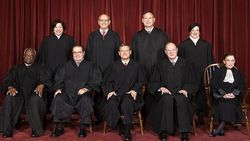
The California court refused to enforce the arbitration agreement, and it was widely predicted that the Court would reverse that decision, in accordance with its Concepcion decision. At oral argument, the Justices seemed agreed that the California courts had gotten the case wrong, but as Justice Kagan put it, “Wrongness is just not what we do here.” In other words, the Court cannot step in every time a state court makes a mistake, and here the contract was so poorly drafted that the blame lies as much with the parties as with the court.
Justice Scalia seemed to think that the Court had to choose between two “horribles.” One horrible would be second-guessing state courts on every case of contract interpretation; the other would be permitting state courts to get away with ignoring the Federal Arbitration Act in favor of state laws that SCOTUS held must yield before that federal law.
SCOTUSblog provides a commentary on the oral arguments, which took place this week, from Ronald Mann here. Ronald Mann’s preview of the case is also on SCOTUSblog here.