
Ninth Circuit Affirms: No Recovery in “Brasher Doubloon” Case
In Swoger v. Rare Coin Wholesalers, plaintiff William Swogen (Swogen) sued for recovery of a consulting fee in connection with a rare coin. The Brasher Doubloons were minted in the 18th century in New York and were among the first coins minted in the United States. The Brasher Doubloons, a $15 gold piece, feature an image of an eagle. Ephraim Brasher punched his initials on the wing of the bird (see image). However, Defendants owned a Brasher Doubloon in which Brasher had punched his initials on the breast of the eagle. The coin they owned (and subsequently sold) was exceedingly rare and thus exceedingly valuable. Swoger offered to sell defendants information that he thought would prove his claim the “Punch the Breast” Brasher Doubloon was the first legal tender coin minted in the U.S.
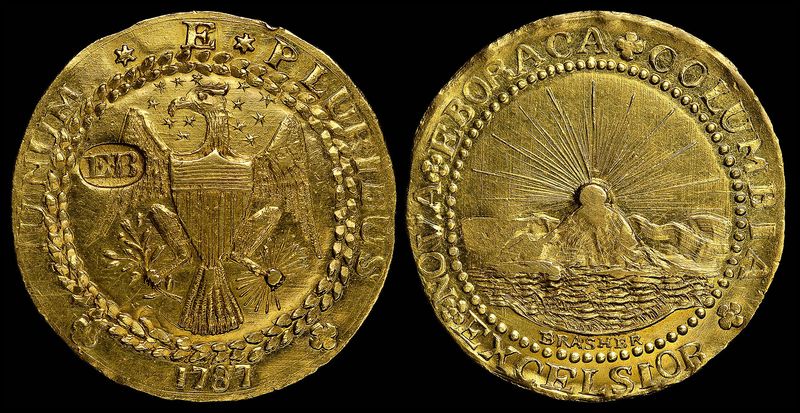
Defendants offered $250,000 for the information, but Swoger wanted $500,000. The parties met at a numismatic trade show, and Swoger shared his information with defendants, which purported to show that their coin must have been minted pursuant to a federal act that specified the weight of gold coins. Defendants refused to pay Swoger for the information he provided, and he sued, alleging breach of contract, quantum meruit and other non-contractual claims.
The district court dismissed Swoger’s claims because he provided no evidence in support of them. The federal act in question applied only to foreign coins, and so the Brasher Doubloon would not have been minted pursuant to it. Swoger did not in fact provide defendants with any information in support of his theory that the Brasher Doubloon was the first legal tender coin minted in the United States. Moreover, all of the information that Swoger provided was publicly available.
On appeal, Swoger claimed that even if the Brasher Doubloon was not minted pursuant to the Actin accordance with the Act, as it was the same weight as Spanish Doubloons and thus could circulate as having a certain value. The Ninth Circuit rejected this argument, because only Congress can recognize a coin as legal tender of the United States, and Swoger, even taking all of his factual allegations as true, did nothing to show that Congress did so with respect to the Brasher Doubloon.
Too bad, but certainly a very interesting fact pattern. And the coin has an undeniable rough beauty.