
Today in history—December 26
1716: Poet Thomas Gray dies. He wrote his most famous elegy in a country churchyard, and will be buried in one: St. Giles’s, Stoke Poges, Buckinghamshire.
The boast of heraldry, the pomp of pow’r,
And all that beauty, all that wealth e’er gave,
Awaits alike th’ inevitable hour.
the paths of glory lead but to the grave.
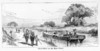 1825: The commercial dominance of the U.S. over Canada is sealed when the Niagara Canal Company opens the new Erie Canal, which connects New York City with the vast Great Lakes region. Absent the canal, the trade of the northern Midwest would have had to go by the St. Lawrence River—and would have made Montreal the commercial capital of the continent.
1865: James H. Mason of Franklin, Massachusetts, patents the coffee percolator. Remember when people made their own coffee in percolators in their own homes, instead of going to Starbucks? Your students don’t.
1931: Phi Iota Alpha. the oldest Latino college fraternity in the U.S., is formed; it traces its history back to the Unión Hispano Americana, which was founded in Troy, New York, in 1898.
1939: Legendary bluesman W.C. Handy records St. Louis Blues—the most famous song he ever wrote—for Varsity Records. Although 16 versions of the song by 15 different artists reach the Billboard Top 25 between 1920 and 1953, this one doesn’t.
 1940: Harvey Philip “Phil” Spector (left), the man who will reinvent the music business in the Sixties, is born. In 1965 Tom Wolfe will dub him the “Tycoon of Teen.”
1950: The Gillette Safety Razor Company pays $6 million for broadcast rights to baseball’s World Series and All Star Games for six years.
1954: The long-running radio serial The Shadow ceases production. Its sponsor until 1949 had been “Blue Coal,” a product of the Glen Alden Coal Company, whose 1958 acquisition gave rise to the Business Associations casebook staple, Farris v. Glen Alden Corp.
1955: Tennessee Ernie Ford’s Sixteen Tons tops the country charts. “St. Peter, don’t you call me,. ’cause I can’t go—I owe my soul to the company store.”
1963: Capitol Records releases the first U.S. single by a British singing group, the Beatles. I Want to Hold Your Hand (backed with I Saw Her Standing There) will hit number 1 in February.
1986: The soap opera Search for Tomorrow finally finds it, and stops production.