
Anti-SLAPP Motion Granted when Filing Suit in Spite of Contractual Promise Not to Do So
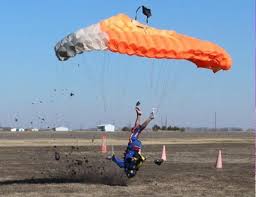
In 2012, Mr. Flores decided to go skydiving in California. He contracted with Skydive Monterey Bay Inc. (“Skydive”) to do so. Unfortunately, his parachute deployed prematurely, rendering him unconscious during the jump that in turn resulted in severe injuries upon landing. Flores of course sues Skydive for various torts. Skydive cross-complains alleging breach of contract based on the release that Flores had signed before the accident. This read that Flores would not “sue or make any claim of any nature whatsoever against Skydive … for personal injuries or other damages or losses sustained … as a result of my ‘parachuting activities’ even if such injures or other damages or losses sustained by me as a result of my ‘parachuting activities’ are caused by the negligence, in any degree, or other fault of Skydive….”
Flores filed a motion to strike Skydive’s cross-complaint under the California anti-SLAPP statute. This is a two-prong test that at bottom required Flores to prove that his lawsuit arose from protected activity and Skydive to prove that it had a probability of prevailing on the claim, in this case the breach of contract.
The court found that despite the contractual clause, Flores had not “waived” his right to the protections of the anti-SLAPP provisions as Skydive argued. The court found that the “filing of a complaint is an act undertaken in furtherance of the constitutional right to petition.” The burden then shifted to Skydive to demonstrate that its breach of contract claim had “minimal merit.” Skydive did not meet that low burden because it failed to provide evidence of damages resulting from the breach (the court relied on the four familiar elements of a contract: existence, performance or excuse by plaintiff, defendant’s breach, and damages). Skydive had simply called Flores’ breach of contract “incredulous,” but did not submit “any affidavits or declarations to support the allegations of damages” such as the costs of defending against the lawsuit and the potential damages on the merits of the claim.

Flores can now continue his lawsuit. The case shows the high importance of not relying on self-serving statements, accusations and bare allegations in legal proceedings. This is another aspect of the law that should be obvious, but apparently is not.
The case is Gerardo Flores v. Skydive Monterey Bay, Inc., 2016 WL 4938863 (not officially published), Monterey County Super. Ct. No. M126778.