
In Memoriam: Shirley Abrahamson
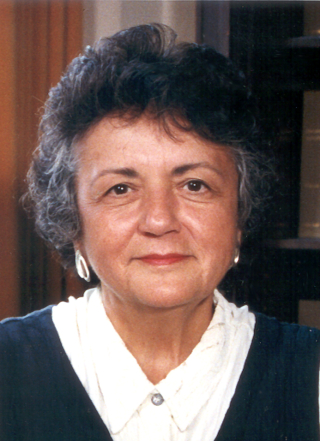
Pancreatic cancer has claimed the life of another leading lady in robes.
Shirley Abrahamson (pictured) was the first woman to become a Justice on the Wisconsin Supreme Court. She later became the first woman to serve a Chief Justice and the Court’s longest-serving member. She died on Saturday at the age of 87. The Milwaukee Journal Sentinel provides an obituary here.
I was regretting that I knew of no important contracts decisions that Justice Abrahamson had authored. Fortunately, friend of the blog, Chaumtoli Huq, speculated that Justice Abrahamson’s gender might have played a role in her decision in Estate of Steffes.
That case is not dissimilar from Marvin v. Marvin in terms of the legal issues it addresses. The facts have a few twists. In Steffes, the plaintiff, Mary Lou Brooks, not only lived with her partner for six years prior to his death, she nursed him during his fatal illness. In addition, both Ms. Brooks and Mr. Steffes were married to other people for the duration of their relationship.
Ms. Brooks provided significant services to Mr. Steffes. She was a cook, housekeeper, nurse, farmhand, and did considerable manual labor both in the areas of agriculture and construction and repairs. She alleged that Mr. Steffes had promised her both the house and the farm after his death. Others corroborated that claim. In the end, he left her nothing. She sought a measly $29,000. After the trial court allowed the jury to consider issues of implied-in-fact and implied-in-law contracts, the jury awarded her precisely half of what she sought. Justice Abrahamson, writing for the majority, upheld the verdict.
Seems like an easy decision, until one reads the dissent. The dissenting Justice pulls out all the stops, labeling the relationship “illicit” and “meretricious.” He insists that Ms. Brooks had no expectation of payment. She was performing gratuitous services. Anyway, she wasn’t much of a nurse, or a cook. The dissent contended that the decision was inconsistent with Wisconsin precedents and with the practices of most states.
Justice Abrahamson was willing to ignore outdated precedents while basing her decision on different lines of cases that supported her view of Wisconsin law. Far from being in tension with decisions of other states, Justice Abrahamson’s was simply on the front end of a trend. She embodied a change in the judiciary and helped foster analogous changes in the law.
The work continues, inspired by her example.