
Contracts and Promissory Estoppel Issues in the Bill Cosby Case
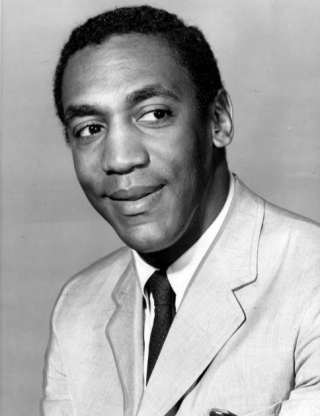
Well-known actor and comedian William (Bill) Cosby, who was sentenced to 3-10 years in prison for sexual assault, was recently released. The grounds for release? Breach of a promise not to prosecute.
Back in 2005, District Attorney Bruce L. Castor, Jr. who investigated allegations of sexual assault brought by Andrea Costand, determined that a criminal trial against Mr. Cosby could not be won. He issued a signed press release in which he announced that “insufficient, credible, and admissible evidence exists upon which any charge against Mr. Cosby could be sustained beyond a reasonable doubt.” D.A. Castor issued the press release in order to prevent Mr. Cosby from invoking his Fifth Amendment not to testify in any civil suit that Ms. Costand might bring. Ms. Costand brought that suit, which resulted in a $3.38 million settlement, but not until after Mr. Cosby had been deposed and had admitted to some of the acts that Ms. Costand alleged. He admitted that he had given her Benadryl tablets, but claimed that the ensuing sexual encounter was consensual. He also admitted that he had provided quaaludes to other women with whom he wanted to have sex.
Fast forward ten years, and we have a new D.A., Risa Ferman, who decided to reopen the case against Mr. Cosby and use the deposition testimony. When Mr. Cosby objected, the trial court found that a press release announcing an exercise of prosecutorial discretion is not a contract. What D.A. Castor was offering was transactional immunity, but the trial court found that he had not done so in accordance with the relevant Pennsylvania statute. Immunity comes from a court, not from the exercise of a prosecutor’s discretion. Even a prosecutor’s promise not to prosecute could be withdrawn. They don’t even have to cross their fingers. Moreover, no promissory estoppel claim could be made out, because reliance on any alleged promise from the prosecutor would have been unreasonable.
In Mr. Cosby’s appeal to the Supreme Court of Pennsylvania, Middle District, the relevant issue was:
Where: (a) [District Attorney Castor] agreed that [Cosby] would not be prosecuted in order to force [Cosby’s] testimony at a deposition in [Constand’s] civil action; (b) [the district attorney] issued a formal public statement reflecting that agreement; and (c) [Cosby] reasonably relied upon those oral and written statements by providing deposition testimony in the civil action, thus forfeiting his constitutional right against self-incrimination, did the Panel err in affirming the trial court’s decision to allow not only the prosecution of [Cosby] but the admission of [Cosby’s] civil deposition testimony?
The Supreme Court affirmed the trial court’s finding that prosecutor Castor had not granted Mr. Cosby immunity from prosecution. However, the Supreme Court overturned the trial court’s determination with respect to Mr. Cosby’s reliance claim, holding that:
[W]hen a prosecutor makes an unconditional promise of non-prosecution, and when the defendant relies upon that guarantee to the detriment of his constitutional right not to testify, the principle of fundamental fairness that undergirds due process of law in our criminal justice system demands that the promise be enforced.
In explaining its decision, the Supreme Court says lots of nice things about how prosecutors have vast powers and ought to be subject to principles of fundamental fairness. I don’t have the expertise in criminal law to know whether fundamental fairness dictated that Mr. Cosby must be released. I suspect that very few criminal defendants, lacking Mr. Cosby’s resources, would be able to win their releases based on claims that the prosecutor had treated them unfairly.
As a general matter, the reliance claim would seem weak in other, comparable contexts. Here, immunity could only be granted through a particular process, and that process was not followed. In an ordinary contractual context, a court would likely find unreasonable reliance on a vague promise when that promise could only be effected through following some well-established procedure that was not followed in this instance. It would be one thing if Mr. Cosby were on his own, but he was a sophisticated party represented by able counsel. But the Supreme Court held that sophistication is not part of the inquiry here and concluded that it was reasonable for Mr. Cosby to rely on the conclusions and advice of counsel. Whether or not their reliance was reasonable seems not to matter.
There was also some question of actual reliance here. Mr. Cosby’s testimony in depositions was consistent with what he had already told investigators in the criminal proceedings. He admitted to providing Ms. Costand with Benadryl; he admitted to sex acts with her afterwards. He claimed that the sex was consensual. How can he claim reliance on a promise of non-prosecution when he had already admitted to facts to which he testified in deposition? True, he also admitted to other acts, but to the extent that those acts subjected him to criminal prosecution, it is hard to see how a promise not to prosecute him with respect to his relationship with Ms. Constand is relevant to his choice to testify as to prior acts. But the Supreme Court found that Mr. Cosby is entitled to a presumption that he only testified in reliance on D.A. Castor’s promise that he would not be criminally prosecuted. Fruits of the poison tree, I suppose.
The Supreme Court rejected the option, favored by the concurring and dissenting Justices, to simply suppress the evidence obtained through Mr. Cosby’s depositions and grant a new trial. Instead, the Court characterized its remedy as a grant of specific performance of D.A. Castor’s promise not to prosecute. That strikes me as an odd formulation. Specific performance is not a remedy for promissory estoppel; it is a remedy for breach of contract. And if we say that, but for his reliance on D.A. Castor’s promise, Mr. Cosby would have invoked his Fifth Amendment rights in his depositions, that might have led to a remedy akin to what the concurring and dissenting Justices proposed. But the majority could have reached its conclusions without speaking of specific performance. As a result of the broken promise, Mr. Cosby was denied his due process rights, and the appropriate remedy is to vacate his conviction and enjoin any future prosecution relating to the subject matter of D.A. Castor’s promise.
Thanks to Sydney Scott, for her research assistance!