
Sid DeLong on Debt Collection
A BRIEF, PROCEDURAL HISTORY OF DEBT COLLECTION FROM WAGER OF LAW TO DEBTOR’S PRISON
Sidney W. DeLong

Contract casebooks that begin with the history of contract law as it developed from covenant and debt invariably mention the procedural superiority of the writ of special assumpsit over the hoary action of debt.
A creditor bringing an action of debt faced a unique defense. Under the procedural rules of the English writ system, a claim of debt could be overcome by a procedural device known as wager of law, a defense that was guaranteed to Englishmen by Magna Carta. Blackstone described the process as follows:
The defendant is admonished by the judge of the nature and danger of a false oath. And if he still persists, he is to repeat this or the like oath: “Hear this, you justices, that I do not owe unto Richard Jones the sum of 10 pounds, nor any penny thereof, in the manner and form as the said Richard hath declared against me. So help me God.” and thereupon his eleven neighbors or compurgators shall avow upon their oaths, that they believe in their consciences that he sayeth the truth. 3 William Blackstone Commentaries on the Laws of England 343.
If these avowals were correctly pronounced, the court was required to ignore plaintiff’s evidence and enter judgment for defendant as a matter of law. The wager of law relied on the religious fear of the sin of perjury and may have worked well for a while. But the practice proved too successful in practice and soon professional swearers could be hired to defend against any creditor’s claim. Frustrated creditors and their lawyers sought an alternative writ to which wager of law was not a defense. Thus was born from trespass a new writ, special assumpsit, that provided a simpler way to enforce contracts and collect debts. The claim and defense were to be resolved by jury trial. The action of debt soon dwindled and died just as the action of contract took its place.
[Permitting debts to be enforced by special assumpsit infringed the procedural rights of defendants who] might henceforth find themselves charged with debts merely because a jury thought that such debts existed and could no longer relieve themselves by compurgatory oaths. Here there was a real problem. There was little law of evidence; lawyers had as yet but short experience of the delicate art of jury trials in such matters; written memoranda of simple contracts were often not to be had; parties were not competent witnesses
Theodore F.T. Plucknett, A Concise History of the Common Law (5th Ed. 1956) 647 (emphasis added).
It seems entirely reasonable that a defendant should have been permitted to avoid a trial by ritual swearing if he would not have been permitted to testify in his own defense at the trial, at which the only evidence of the alleged debt might be the unrebutted testimony of the plaintiff’s (possibly) perjured witnesses.
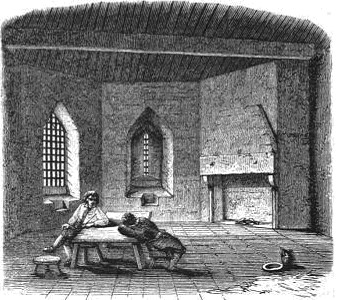
It works like this: the creditor sues the debtor and obtains a default judgment. It then serves notice on the defendant for a deposition to examine his assets under F.R.C.P. 69. When the debtor fails to appear, as they always do, the creditor obtains from a compliant judge a judgment of contempt against the defendant for failing to appear at the hearing. An arrest warrant duly follows. This warrant lies dormant until the defendant is stopped for a traffic offense or otherwise comes to the notice of the police, at which time he is arrested for the crime of contempt of court. His bail is set at the amount of the debt. He stays inside until he pays up. The procedure is described here:
Dickens would have been proud.
And happily, despite Slade’s case, there is still a role for wager of law to play in modern civil procedure, albeit a role for creditors rather than for debtors. During the Great Recession, many homeowners defaulted on mortgage payments and were sued in foreclosure by plaintiffs claiming to be the assignees of their original notes and mortgages. But their notes and mortgages had been assigned and reassigned so many times and the assignments were so casual that the plaintiff seeking to enforce the debt no longer possessed the original promissory note. When defendants raised the “produce the note” defense, plaintiffs were stuck and the cases were dismissed.
Not to worry: the legislature and courts soon devised a way for such a plaintiff to wage its law: the plaintiff satisfied its obligation by filing an affidavit avowing that it had once been assigned the note but that it had been lost or destroyed. The modern wager of law is superior to the old, requiring only one witness rather than twelve and not requiring live testimony. And so the common law works itself pure.