
Wood v. Boynton Rides Again!
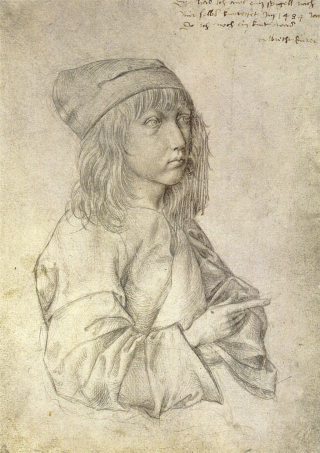
There’s a contract involved here in addition to the estate sale, but the details are not public. The purchaser was friends with a rare book dealer. He was acquainted with Clifford Schorer, an entrepreneur and art dealer. Mr. Schorer, when told of the existence of a Dürer drawing, was skeptical, as such drawings were exceedingly rare and none were believed to be unaccounted for.
Intrigued, Mr. Schorer visited the purchaser and was persuaded of the drawing’s authenticity. A panel of experts at the British Museum recently concurred. Mr. Schorer paid $100,000 for a share of the sale price. While the details of his agreement with the purchaser are private, according to the Times, the purchaser gets to keep the $100,000, even if the drawing turns out to be a forgery. The current state of our knowledge suggests that even if it is not a Dürer, it is a very valuable art work.
The work is printed on paper that bears the telltale watermark of Dürer’s patron Jacob Hugger. Other details have persuaded most experts that the work is that of Dürer. At least one dissenter thinks it is the work of one of Dürer’s apprentices, Hans Baldung, which, if true, would reduce the work’s value by perhaps 75%. Nobody points with pride to a framed drawing and says, “That’s a Baldung” unless they are prepared to add, “He was Dürer’s apprentice, and some mistake his work for that of Dürer.” It has been almost 100 years since a new Dürer has turned up. This work, it turns out, was not unknown. It has been tracked through multiple transactions before it arrived at a Massachusetts estate sale. The family that owned it had become convinced that it was inauthentic. Apparently, the family eventually lost all memory that the work might have any value at all, and they are now not responding to press inquiries. What is there to say?
I must say, vulgarian that I am, my response to this story echoes my response to other valuations that exceed my grasp. It’s a nice drawing. If you value nice drawings, you might want to buy it and put it in your home. But if you value nice drawings, the value of this drawing should not hinge (much) on who made it. This particular drawing might have extra importance because it tells us something (but not much that we don’t already know) about the development of a great artist. That fact does little to enhance the aesthetic experience one has when regarding it. Because it has this extra value it should be preserved and made available for study by the small clerisy of experts who care deeply about such things. It should be on display in some public institution and not sold to some person who likes having pretty things that will appreciate in value over time.
This post is colored by the fact that I watched “Don’t Look Up” over the weekend. My current thinking is that we need to work on accepting the impermanence of things and allocate our resources accordingly.