
Thinking About Disclaimers
I‘m not a fan of disclaimers, and yet my instincts diverge in two cases that I taught last week and this week. My students’ instincts, no more consistent than mine, tend in the opposite direction in both cases. My hunch is that the differences in our instinctual responses turn on the value we place on the underlying activities in the cases.

My students were pretty unanimous in agreeing with the court’s finding that plaintiff had assumed the risk, and they thought the release ironclad. I don’t disagree with that outcome on the law. The release she signed included the following language:
The risk of injury from the activity and weaponry involved in paintball is significant, including the potential for permanent disability and death, and while particular protective equipment and personal discipline will minimize this risk, the risk of serious injury does exist.
That is admirably clear, but I asked my students whether, as a matter of policy, we should allow facilities that acknowledge that the activities that they host are dangerous to disclaim liability for their own negligence. I think the answer is clearly no. No students joined my side. Those who spoke either thought that paintball is fun and that I was being a killjoy, or they thought that paintball is stupid, and those who decide to participate assume the risk of injury. I suggested that if we did not allow such disclaimers of liability as a matter of public policy, we would force the paintball venues to take reasonable precautions and insure against harms rather than socializing the costs of their own negligence. Howls of outrage, or at least, not a lot of love.
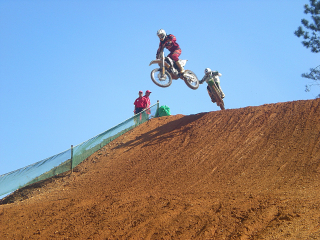
This week, I am teaching Bell Sports v. Yarusso in Sales. In that case, plaintiff was injured while riding at dirt motocross track. He was thrown from his bike and landed on his head. The helmet did not protect him enough to prevent an injury that rendered him a quadriplegic.
The court held Bell Sports to what it construed to be a warranty:
[T]he primary function of a helmet is to reduce the harmful effects o a blow to the head . . . The [helmet] is designed to absorb the force of a blow first by spreading it over as wide an area of the outer shell as possible, and second by the crushing of the non-resilient inner liner.
The same document also repeatedly warned that “NO HELMET CAN PROTECT THE WEARER AGAINST ALL FORESEEABLE IMPACTS.”
My instincts about assumption of risk now flip. Bell was not negligent. It is not clear to me that any warranty was breached. Bell never promised that Mr. Yarusso could not be injured while wearing the helmet. On the contrary, it only warranted that the helmet would reduce the harmful effects of a blow to the head. That it surely did; just not enough to prevent Mr. Yarusso’s injury.
My experience in teaching the case thus far is that my students’ sympathies are with Mr. Yarusso. I wonder why they think the law should provide damages to Mr. Yarusso but not to Ms. McCune. Unlike Bell, the defendant in the McCune case controlled the environment in which plaintiff was injured. Unlike Bell, the defendant in the McCune case was negligent. I surmise that the dangers that Mr. Yarusso assumed were far more significant than the dangers from paintball, and the dangers from paintball seem far more easily avoidable with ordinary care. Neither activity (paintball and motocross) has any appeal for me, but at least Bell tried to protect Mr. Yarusso, and I don’t know what it could have done differently. To the extent the indoor shooting range attempted to help Ms. McCune, it failed, and it seems like what is lacking is any motivation to exercise ordinary care. That, in my view, is where public policy needs to step in.
Ultimately, I can’t say that either case was wrongly decided. Although the cases raise similar questions about assumption of risk, McCune turns on disclaimers of liability in connection with releases, and Yarusso turns on warranty liability. The court in Yarusso seems to have treated the limiting language in Bell’s warranty as an attempted disclaimer, and that may be right. The jury made a determination of liability in the case which the Delaware Supreme Court found adequately supported in the record.