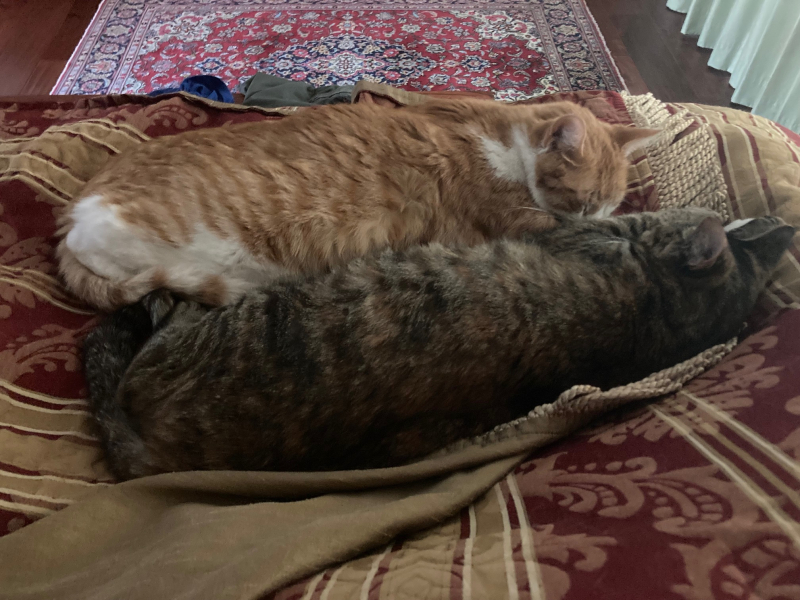
Litter Boxes, Merchantability, and the Supply Chain Crisis
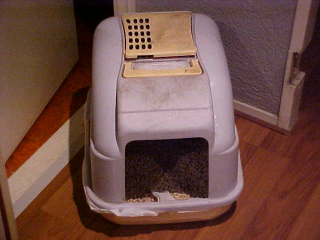
I waited a reasonable time, and having again found nothing suitable at Target, I returned to said specialty pet store. Indeed, a new batch of litter box tops and bottoms had come in. I chose a bottom of an appropriately neutral color and found a matching top. The top, although the same brand, and pretty much the same size as the bottom, did not fit on the bottom. Mind you, the fit should be snug, but when the two parts match up, there is a natural fit, and then there are snaps that secure the top in place. But these parts would not match up that way no matter how much force I used or how much I tried to bend the plastic parts to fit. I tried another combination. Same result. And another. And another. And another. You get the idea.
I explained to her that I don’t expect to replace litter boxes on a monthly basis (and let’s not explore how infrequently I replace them please) and that she should not try to sell items that do not work as they ought. She replied with a lengthly complaint about supply chain problems and the myriad difficulties she was facing trying to keep her shelves stocked with items for sale. She gestured dramatically to the tragic lacunae on her shelf space.
I felt for her. It must be awful to take pride in your work as a store manager and to be unable to stock your shelves with goods you used to be able to order and receive as a routine matter. Now, she had to scrape together inventory from secondary and tertiary suppliers with whom she had no track record and on whom she could not rely to provide quality goods. And so here we are.
The goods on the shelf of this store are not merchantable. They will not pass without objection among the buying public. As a professor of contracts and sales, I know that I should be able to return a cat box that breaks after a month or two for breach of the implied warranty of merchantability. But the typical consumer would not know to bring such a claim, and any express warranty that came with the litter box may have gone to the recycling bin long ago. The Internet might help, if one knows to look.
But the sales manager may want to take that risk. Presumably, some people will make do with faulty litter boxes. There is duct tape; one can just take off the lid. One can live with a litter box with a lid that is slightly ajar. Meanwhile, if the manager threatens to send the non-conforming goods back to the vendor, the vendor may argue that she has already accepted the goods and force her to establish grounds for revocation of acceptance. Moreover, what comes next? The vendor has not intentionally sent you non-conforming goods; perhaps any substitute proffer would be equally non-conforming, and eventually you run out of options and can only offer imperfect goods for sale.
After this is all over, we should all rejoice in every day not made more complicated by supply chain problems. Cats take things for granted. You can’t expect much understanding from them when you try to explain why you haven’t been able to replace their litter box.