
Teaching Assistants: Reagan Seidler on the Law of Haunted Houses
It’s not clear that the realtors understand their market. There is some evidence that haunted houses sell for a premium. In discussing the mother of all haunted house cases, Stambovsky v. Ackley, that same Eric Goldman noted that the case’s notoriety heightened interest in the house. House Beautiful Magazine has a podcast, Dark House, that tells stories of houses with some skeletons in their closets, or something similar. Overall however, the evidence suggests that stigmatization has a negative effect on the sale price of homes.
In light of this information, should one disclose the “fact” that a house is haunted or otherwise stigmatized? What does the law require? According to Reagan Seidler‘s new article, The Law Of Haunted Houses, it depends. The article explores sellers’ disclosure obligations in light of common law, statutes, and the patent or latent nature of the defect. Unsurprisingly, the answers vary by jurisdiction.
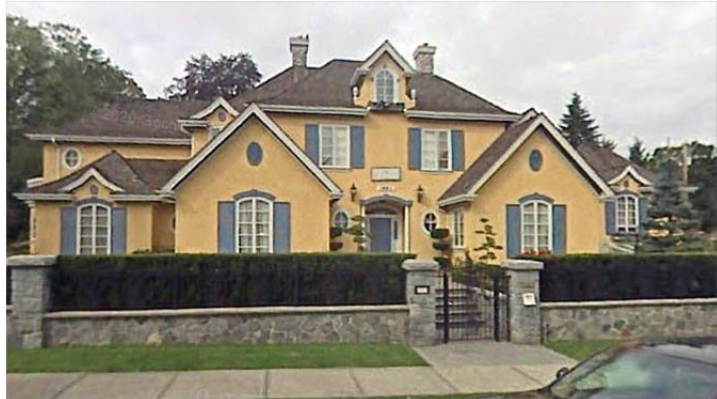
The article begins with an account of Wang v. Shao, a dispute over the property pictured above. The 9000 square foot property in Vancouver’s Shaughnessy neighborhood sold for over $6 million in 2009, with a $300,000 deposit. The buyer, Ms. Shao, soon discovered that the son-in-law of the seller, Ms. Wang, had been gunned down in front of the house in 2007, allegedly in connection with his membership in a crime family. Ms Shao then repudiated the deal, and the house was sold to a better-informed buyer for $5.5 million. Ms. Wang sued to keep the deposit and for damages sufficient to make up the difference in the two sale prices. Ms. Shao counterclaimed, alleging that Ms. Wang had a duty to disclose the murder. Did Ms. Wang have such a duty?

The doctrine of caveat emptor provides the background rule in this realm, but there are significant exceptions. First, sellers may not actively conceal material defects in the property. Second, even if there is no duty to disclose, there is a duty to correct statements of fact that might contain misrepresentations of material facts. For example, you may state that the property is free of bug infestations. If you later learn that murder hornets (pictured, left) have taken up residence in the eaves, that’s something you need to disclose.
Sellers have no duty to disclose patent defects easily discoverable by the buyer. Outside of strong caveat emptor jurisdictions such as New York, sellers must disclose at least some latent defects. Some Canadian jurisdictions and California seem to require disclosure of all latent defects, but the more common view is that one has to disclose only latent defects that render the home dangerous or unfit for habitation.
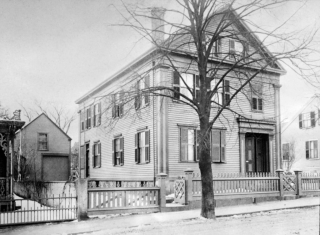
The first difficulty with stigmatized houses is that the defect may be latent or patent, depending on the notoriety of the resident ghost or crime. The fact that most states do not require disclosure suggests a second difficulty — how do we know when the stigma is material? I’m not moving in to Jeffrey Dahmer’s house until they replace the freezer, but I would not be dissuaded from buying a newly-renovated house Victorian house in which the original owner, a melancholy local physician, had killed himself with an overdose of laudanum upon reading a translation of The Sorrows of Young Werther.
In Wang v. Shao, the trial court found that the stigma attached to the house was not a defect “in respect of the property or premises” that had to be disclosed. Even if was a defect, it was discovered through an ordinary Internet search and therefore was patent, not latent. The British Columbia Court of Appeal found no misrepresentation when Ms. Wang, when asked why she was moving, said that she wanted to be closer to her granddaughter’s new school. She was not legally required to add, “We had to move after her father was killed allegedly in a gang-related shooting right in front of the house.” If the buyers had thought to ask about violent deaths in the house or on the property, Canadian law might require an honest answer.