
Contracts with Navy Seals

I made the first version of this argument in the context of the Court’s decision in Fulton v. City of Philadelphia. In that post, I remarked on the oddity that the Court was forcing the City of Philadelphia to contract with Catholic Social Services (CSS), despite CSS’s insistence on discriminating against same-sex married couples. CSS’s approach violates the city’s policy with respect to itself and its contracting partners. I argued that CSS is entitled to its religious freedom, but it might not be entitled to a contractual relationship with the city.
Enter Austin v. U.S. Navy Seals, a case in which the Navy asked the Supreme Court to lift a stay, imposed by a District Court and upheld upon appeal to the Fifth Circuit Court of Appeals, on its policy that permits the Navy to consider respondents’ vaccination status in making deployment, assignment, and other operational decisions. Until the last few terms, this case would have seemed to me a complete no-brainer. Under well-established doctrine, courts are extremely reluctant to interfere with operational decisions of the U.S. armed forces, even if those decisions burden First Amendment rights.
Austin and 34 others sought religious exemptions from the Navy’s vaccination requirement. Both the District Court and the Fifth Circuit stayed the Navy’s vaccination requirement pending a decision on the merits. The Supreme Court granted the Navy’s request to lift the stay pending a resolution of the case on the merits in the Fifth Circuit. The majority opinion was unsigned. Justice Kavanaugh wrote a concurring opinion stating the obvious: Courts lack competence to second-guess the Navy’s operational decisions, and even if those decision burden religious liberties, such rights are overridden by the state’s compelling interest in providing national security. Justice Kavanaugh concludes:
I see no basis in this case for employing the judicial power in a manner that military commanders believe would impair the military of the United States as it defends the American people.
Justice Thomas dissented without opinion. Justice Alito wrote a dissent, joined by Justice Gorsuch. They point out that 4000 service members filed requests for religious exemptions. All were denied. Some were allegedly told that challenging the denials would hurt their careers and that the Navy had decided ex ante that there would be no exemptions from its vaccination policy. Justice Alito would make it the government’s burden to show . . .
that mandatory vaccination is the least restrictive means of furthering the interest it asserts in light of the present nature of the pandemic, what is known about the spread of the virus and the effectiveness of the vaccines, prevalent practices, and the physical characteristics of Navy Seals and others in the Special Warfare community.
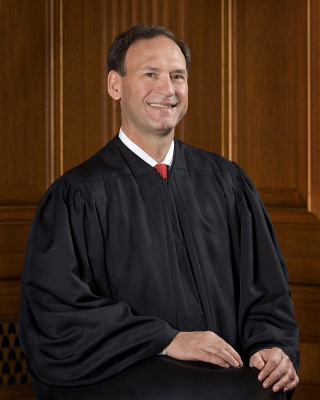
[T]he Court’s order allows the Navy to use respondents’ unvaccinated status as a reason for directing them to perform whatever duties or functions the Navy wants, including sitting alone in a room pushing paper or reading manuals for the duration of the appellate process.
I find this description of life in the military wholly unsurprising. Remember early in COVID when cruise ships became death traps? The threat that an outbreak of COVID aboard a naval vessel could infect hundreds of service members and jeopardize a mission is obviously a threat to military preparedness that merits a strong response. And the military cannot function if every one of its operational decisions is to be checked by any Article III judge with no military experience who thinks there is a less-restrictive means of achieving military ends.
But getting back to my contractual theme. I am working with a student, Jordan Kimball, mentioned in this previous post, who is active military. Jordan is writing her note about limitations on freedom of expression in the military. Her focus is on the procedural complications the military faces in communicating its directives relating to personal expression throughout a huge organization when those directives are constantly being updated in response to cultural trends. Jordan is one of my students who firmly believes that people ought to read contracts before entering into them, and she wrote in response to this case:
Read the back of the ticket before you sign the dotted line and understand that the military owns you for the entirety of your contract. Every new medication, doctor visit, tattoo, etc. is required to be reported to your chain of command and decisions are absolutely made on that basis.
In short, I think the dissenters in Austin are wrong for reasons having to do with the separation of powers and institutional competence. In addition, Justice Alito begins his opinion with outrage that people who have volunteered for hazardous service are being treated shabbily. Jordan’s perspective is exactly the opposite. You volunteered for this. You signed a contract, and the possibility of shabby treatment was pretty much an express term of the deal.