
Judge Newsom’s Entertaining Insurance Law Opinion
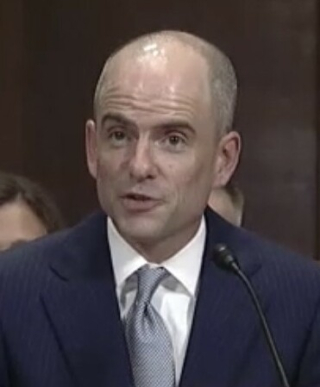
Here are his opening lines:
This is an insurance case. Fear not, keep reading. In determining whether a pair of insurance policies cover losses resulting from “named windstorms,” we have to decide an important and (as it turns out) interesting question about the interpretation of written legal instruments . . .
The interesting issue is whether a court should give effect to the objective meaning of a contract in the face of evidence of contrary intentions.
In this case, the insurer presented strong evidence that “the parties intended and expected that the policies would exclude damage caused by named windstorms.” However, the policies themselves do not exclude such damage from coverage. The District Court gave effect to the parties subjective intentions. The Eleventh Circuit reversed, bound by the law of the state of Florida and the common law more generally, which provides that subjective intent must yield to clear, contrary contractual language.
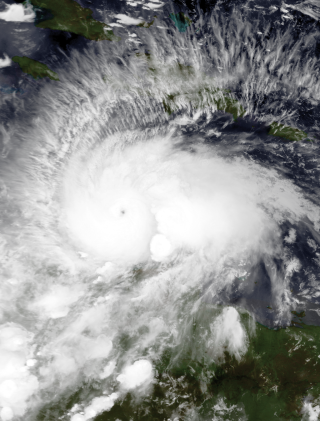
One marvels at the facts. If I wrote a fact pattern like this for my students, they would have a hard time suspending disbelief. How could a sophisticated party like an insurer make such a significant mistake? The timing is not entirely clear from the facts, but it seems likely that Shiloh filed an insurance claim for hurricane damage but then forged ahead to save money by excluding hurricane damages going forward. Lightning doesn’t strike twice reasoning? And then the sophisticated party made the identical mistake in year 2 that it had made in year 1 notwithstanding the fact that its insured filed a claim in year 1 that it had denied based on the very exclusion at issue in the year 2 renewal. When dealing with other, similar cases of corporate inattention, I suggest to my students that so-called sophisticated parties may be no more careful about reading contracts than are ordinary consumers. The level of inattention at work here is sobering.
The case turns out to be an easy one under Florida law, which provides that unambiguous insurance policies are to be applied as written — “end of story,” Judge Newsom writes. If an insurance contract is ambiguous, the Florida Supreme Court ruled, in answering a certified question, that courts should not consider extrinsic evidence. Rather they should rule based on the contra proferentem canon — ambiguous contracts are construed against the drafter. The Eleventh Circuit treated the 2017 policy as unambiguously covering named windstorms. In considered the 2016 policy as ambiguous, but only because Shiloh conceded that it was ambiguous. The court seemed unconvinced, but it made no difference. Either way, Aspen failed to exclude named windstorms from coverage.
The case was remanded for further proceedings, but Judge Newsom’s final footnote strongly hints that the district court should grant judgment for Shiloh. I wonder if Aspen isn’t entitled to some recovery for unjust enrichment. If the $10,000 discount reflected the value of the named storm exclusion, Shiloh got coverage for which it did not pay. Shiloh does seem unjustly enriched; however, allowing recovery in this instance might undercut the protective principle that gives rise to the contra proferentem canon.
I am okay with this result in the insurance context. Holding insurers to their written policies seems an appropriate corollary to the contra proferentem canon. In other contexts, I would think the general rules that permit courts to reconcile express language with extrinsic evidence would allow a court to do what the District Court did here.