
Recharged: Another Bankruptcy Court Says Electricity Is NOT a Good
In February, we posted about an Oregon bankruptcy court that had concluded that electricity is not a good. Last week, a New York bankruptcy court followed suit in an unpublished opinion in In re Sears Holdings Corp., which cites to the Oregon case but fails to cite to the blog. No good.
Bankruptcy Courts receive little guidance from federal law, because the term “goods” is not defined in the Bankruptcy Code, and definitions provided elsewhere in the U.S. Code provide little guidance. As a result, Bankruptcy Courts look to the U.C.C. for a definition of “goods.” The UCC is universally adopted, and given the uniformity interests of having a federal bankruptcy system, it makes sense to follow the uniform law on this matter. And yet, courts have reached different conclusions on the status of electricity. However, statutory priority status is to be construed narrowly. Because Congress did not make it clear that electricity is a good, it should not be treated as one. So reasoned the New York court.
In the prior post, I suggested that the Uniform Law Commission and the American Law Institute should intervene and settle the matter definitionally, as did the CISG in Article 2(f). Stephen Sepinuck responded in the comments with the view that because of the small number of cases, mostly in the bankruptcy context, the issue lacks the urgency that would call for a response from the ULC or the ALI. I think this case provides fodder for the contrary conclusion. The court both notes the value of uniformity in the treatment of electricity in the bankruptcy context and uses ambiguity as a ground for not treating electricity as a good. But it also acknowledges that, where a contract specifies that the laws of a particular jurisdiction apply and those laws treat electricity as a good, it will also be treated as a good for the purposes of the Bankruptcy Code. The status quo thus does not produce uniformity — undermining a goal of both the UCC and the Bankruptcy Code.
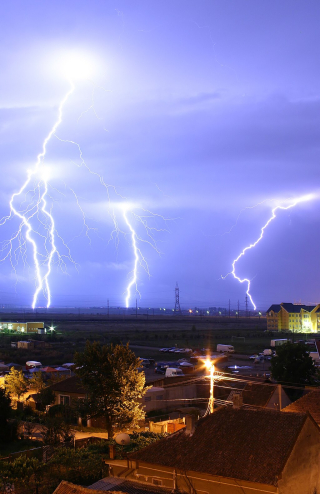
I’m also just ticked off because I think electricity is a good. Does it move? Does it ever! Is it tangible? Well, I wouldn’t recommend touching it to find out! In his comment, Professor Sepinuck provides additional good reasons for treating it as a good. That said, I’m also a positivist and so would be perfectly fine with not treating it as a good, so long as there is a definition of good that excludes electricity.
Hat tip to my fellow Oklahoma transplant Kara Bruce.