
Book Contracts and Supreme Court Ethics
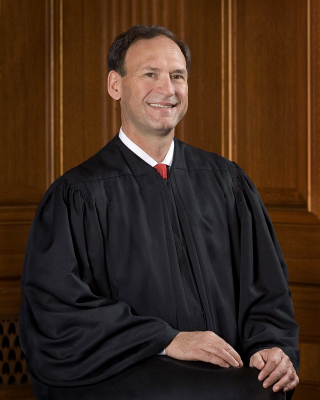
Justice Alito (left), in an interview with the Wall Street Journal (behind a paywall), said (as quoted in John Kruzel‘s reporting in Reuters), “No provision in the Constitution gives [Congress] the authority to regulate the Supreme Court — period.” That is manifestly untrue and manifestly irrelevant. It is untrue because the Constitution grants Congress the authority to impeach Supreme Court Justices. That is a constitutional mechanism of regulation. But even if there were no express provisions in the Constitution, the system of checks and balances that the Constitution creates gives rise to implied congressional powers to regulate the Supreme Court. Justice Alito, who with his colleagues regularly engage in the practice of constitutional review, is undoubtedly aware that there are constitutional powers that exist notwithstanding the lack of any express constitutional provision to which one can point as the source of that power.
Notwithstanding strong arguments for Congress’s power to regulate the ethics of Supreme Court Justices, it has not exercised that power. The remedy for ethics breaches by Supreme Court Justices, as things stand, would be impeachment, but it is hard to imagine any ethics lapses that would garner 67 votes for impeachment in the Senate.
Which brings me to the topic of Justice Sotomayor’s book tours. It is very common for authors to promote their books. For example, you might be interested in an edited collection of essays on Hans Kelsen in America. There. That was pretty shameless, wasn’t it? Unethical? I don’t know. There is no code of ethics for law blogs. See what I did there?
If an author is a celebrity, they have far more opportunities to promote their books, and some of those can be quite lucrative. It is perfectly normal for an author to arrange readings and signings and to have the publisher ship books to the location where the reading will take place. For celebrities, having people line up to have you sign their books is a great way to get people to buy the book, and the author may not mind if many of them don’t read past the inscription.
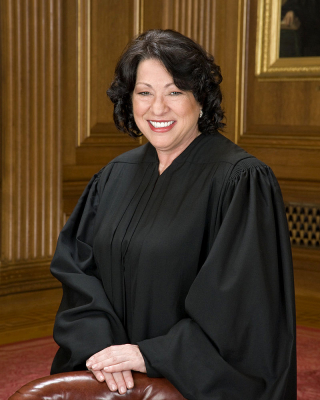
Some of the story, as reported, doesn’t make a whole lot of sense. The story suggests that Justice Sotomayor had thousands of book sent to her chambers for signing. That strikes me as absurd. You don’t sign 11,000 copies of your book and then give a reading at which people line up to have you sign your book. I suppose it is possible that they sign up to get an inscription beyond the signature, but from a marketing perspective, that seems like an odd way to do things. But the AP report has documents showing that thousands of books were sent to the Supreme Court. Given the large advance and royalties the Justice earned through this publication, there is no reason why Court resources should be involved in its distribution. The publisher is making a lot of money here; let it send some low-level staff to organize the signing event and arrange for the shipment of the books to the relevant venues. The signings can take place . . . at the book-signing events. Book publishers ought to know more about how to run such an event than Court staff. And Supreme Court Justices have better things to do with their time than sign their names 11,000 times. So does Bob Dylan, as we discussed here.
In my view, the country would be better off if Supreme Court Justices were not all millionaires, but given the extent to which members of Congress are able to enrich themselves, Congress is in no position to scold the Justices for profiting from their status. In the current environment, it is hard to see how book royalties, regardless of their magnitude, can constitute an ethics violation, and I see a lot of value in the book tours. They get the Justices out of the Beltway and give them opportunities to engage with ordinary citizens. To the extent that people come up to have their books signed, that is an opportunity for one-on-one interactions with a Justice, which can be inspiring — especially for young people — in so many ways. With Justice Sotomayor, there are issues because her publisher had business before the Court, and she failed to recuse herself. It appears that she acknowledges that this was wrong and attributes it to a gap in the Court’s conflicts processes that has now been addressed.
In this case, and in every case involving Justices profiting from their celebrity and possible misuse of public resources, Justice Sotomayor is entitled to argue that she had no idea that her conduct might raise ethical scruples. If she were so inclined, she could point to other instances of similar conduct by other Justices or she could simply raise rhetorical questions about why Justices should be expected not to do what other authors do without raising hackles. But with an ethics code in place, Justice Sotomayor would not have to make such arguments. She would know the bounds of permissible behavior, and she would not act outside of those bounds.