
Sidney DeLong on Signs & Wonders
Signs and Wonders
Sidney W. DeLong
“But Does it Really Look Like a Duck?”
In the 90’s I taught a course entitled “Law and Interpretation,” which dealt with the theory and practice of legal and non-legal interpretation. You can imagine my glee when before the semester began, I read the following local news item.
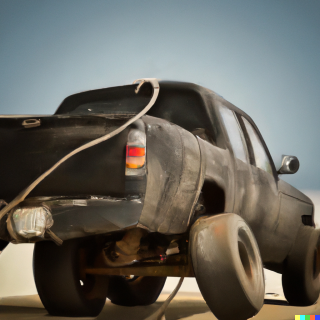
On July 15, 1996, 26-year-old Jason Sprinkle of Seattle, Washington, a performance artist also known as “Subculture Joe”, parked a pickup truck at Westlake Center, near Nordstrom’s. He deflated the tires and walked away. The pickup was old and battered with wires dangling from it. In the truck bed was an 1800-pound metallic sculpture of a human heart. On the bumper of the truck were painted the words Timberlake Carpentry Rules (the Bomb!).
Alerted by alarmed passers-by, The Seattle Police Department evacuated a nine-block area around the truck for 5 1/2 hours, during which time a bomb squad examined the truck and detonated a small explosive device near it. Traffic was snarled for hours and merchants lost thousands of dollars in sales.
Sprinkle turned himself in later that day after hearing about the reaction on the news. He was arrested and charged with violation of the Washington State Explosives Act:
Intimidation or harassment with an explosive — Class C felony. Unless otherwise allowed to do so under this chapter, a person who exhibits a device designed, assembled, fabricated, or manufactured, to convey the appearance of an explosive or improvised device, and who intends to, and does, intimidate or harass a person, is guilty of a class C felony. R.C.W. 70.74.275
For several days the local news media were filled with denunciations and occasional defenses of the ill-fated artist. His attorney did not help his case by initially characterizing it as an issue of freedom of speech, a provocation that drew forth a flurry of references to shouts of fire in crowded theaters. It became generally known that the defendant Sprinkle had achieved some local notoriety by other public art displays, including exhibiting the heart sculpture near Westlake Plaza to protest the city’s decision to block off a street to serve local business interests. After this protest failed, Sprinkle parked the truck, with its legend and contents in full view, outside a warehouse where he lived for several months, in full view of the neighbors, and without having excited comment or incident. He then renewed the protest in the manner that led to his arrest.
The case presents a garden-variety, legal interpretation issue: Was the truck “designed, assembled, fabricated, or manufactured, to convey the appearance of an explosive or improvised device”?
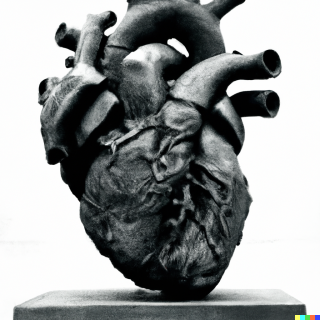
In appearance, the truck looked exactly like any other beater pickup except for its legend and the gigantic metal heart. The metallic heart had been previously displayed in the same location without causing comment. So did the words painted on the bumper Timberlake Carpentry Rules (“The Bomb!) either alone or with the metallic heart sculpture “convey the appearance of an explosive or improvised device,” i.e. a truck bomb? I would have thought not, for two reasons.
First, the words had a much more probable meaning than that the vehicle was a bomb. Contemporary Urban Dictionary postings confirm that in the early 1990’s, the words “the bomb!” or “da bomb!” mean “very cool.” Read in the cultural context of the 1990’s Seattle art scene, the phrase Timberlake Carpentry Rules (The Bomb!) says clearly that Timberlake Carpentry is very cool, not that the truck contains a bomb.
Indeed, if Sprinkle had removed both the legend and the sculpture, he would have made the truck more nearly resemble a typical car bomb. But that would not have gotten him arrested. The problem with the statute is that there is no standard “appearance” of a car bomb other than as a vehicle. And if it doesn’t look like a duck, it generally isn’t one.
Possession
Driving to work one day back in 2009, I saw a large, white panel truck that apparently served food to employees on jobsites. The sign on the side of the truck originally said Joe’s Catering or Sal’s Catering or something like that. I don’t know what it originally said because what it actually said was
‘s Catering.
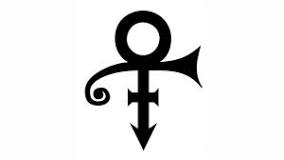
Anyway, on further thought (the traffic stoppage was really long that day) what occurred to me was not so much the signage questions but the practical problems that the sign could pose to the legal system. Suppose for example that I had seen the truck get into a traffic accident and that I had later been examined about it at trial as an eyewitness:
Q. Mr. DeLong, did you see a sign on the side panel of the truck?
A. That’s “Professor” DeLong, if you will. Maintaining dignity and control.
Q. I’m sorry. Professor DeLong, did you see the sign on the truck? Snidely.
A. Yes I did. Somehow that didn’t work right.
Q. What did it say?
A. ’s Catering. After a show of deliberation.
Q. I beg your pardon?
A. ’s Catering.
Q, Would the Reporter please read back the last answer?
Reporter does so.
Q, Z-katering?
A. Right. With prissy assurance
Q. Aside to associate: “Google that.”
A. Okay, disregarding the sign, Professor DeLong, please describe the truck you saw?
Q. It looked exactly like a bomb.