
Can You Recover An Engagement Ring If You Are Already Married When You Proposed?


And yet that humble sheet harbored a brilliant gemstone.
The case involved a dispute over an engagement ring, which is a topic about which I posted not so long ago, recounting the very dishy case of Johnson v. Settino.
Summarizing the case of Campbell v. Tang, the digest read:
A gift given by a [donor] to a [donee] on condition that [the donee] embark on the sea of matrimony with [the donor] is no different from a gift based on the condition that the donee sail on any other sea. If, after receiving the provisional gift, the donee refuses to leave the harbor, — if the anchor of contractual performance sticks in the sands of irresolution and procrastination — the gift must be restored to the donor.
Alas, that part of the opinion was a quotation from Pavlicic v. Vogtsberger, a Pennsylvania Supreme Court case from 1957. But Campbell v. Tang ain’t bad, for those who like this kind of case.
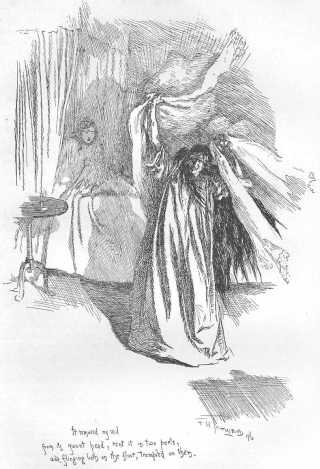
Mr. Campbell requested that Ms. Tang sign a prenuptial agreement, and she eventually retained a lawyer to advise her on that matter. It was her attorney who discovered that Mr. Campbell was in fact still married. Ms. Tang broke off the engagement and left the couple’s shared residence, apparently never having cracked the house’s many mysteries: an unexplained piece of red fabric hanging from the open window of an abandoned upper room, her future husband’s bed set ablaze during the night, the dour house attendant who guarded the third- floor room off the gallery, and the room itself, which Ms. Tang never dared approach.
You think the parallels between this case and Jane Eyre wholly invented? Well get this! Mr. Campbell explained that, while he and his wife were long separated, he could not divorce her because she needed to retain his healthcare coverage. He also liked the extra tax exemption he derived form their continued matrimony. Okay, I admit it. There was no reference in Jane Eyre to the tax advantages of having Bertha Mason residing in Mr. Rochester’s attic. Not exactly Gothic, that.
Ms. Tang retained her engagement ring and accompanying necklace when she broke off the engagement. After trial, the jury allowed Ms. Tang to keep both items. But Pennsylvania is not Massachusetts. As readers may recall, in Massachusetts, courts decide engagement ring disputes by determining which party was “at fault” for the breakup. Pennsylvania adopts one of the sensible rules available: engagement rings are conditional gifts that must be returned if the couple never weds.
But wait (and this is sweet!). The Pennsylvania appellate court reasons that the jewelry that Mr. Campbell gave Ms. Tang was not a conditional gift. He was already married and so he lacked capacity to become engaged. Thus no conditions attached to his gift to Ms. Tang, and she should retain it, notwithstanding their breakup.
I love this case. I love it so much, I may teach it as a supplement to my section on incapacity defenses. It is a case of first impression in Pennsylvania, and I don’t know how often the issue arises, but it provides an interesting exploration of the concept of capacity. Also, it might be an opportunity to discuss legal realism with students. Is the Pennsylvania court inventing a rule because it doesn’t think people should lie to their betrotheds about their marital status?