
SCOTUS Takes Another FAA Case
A couple of years ago, we wrote about the Arbitration for All approach to the Federal Arbitration Act (FAA), which was given extreme expression in a recent Judge Easterbrook opinion. That opinion builds on a series of SCOTUS cases from a decade ago (we barely took notice of Stolt-NielsenRent-A-CenterConcepcion, and here’s our post on Italian Colors). Now, arbitration is in retreat on a number of fronts.
First, the Consumer Finance Protection Bureau attempted to prohibit class-action waivers in consumer lending agreements. That regulation was nixed by the Republican-controlled Congress soon after Donald Trump took office. Second, mass arbitration has lead some companies to remove compulsory arbitration from the their terms and conditions, a development that we most recently covered here. Finally, SCOTUS recently issued two unanimous opinions limiting business entities’ ability to compel arbitration on employees once the litigation has progressed for a while or if the employees are transportation workers.

The majority opinion kept things simple. Following the Supreme Court precedent of Circuit City Stores v. Adams, the Court noted that only “transportation workers” come within the Section 1 exemption from the FAA. The Second Circuit agreed with the district court that delivery workers are not “transportation workers.” Then, after SCOTUS decided Saxon, the panel reconsidered its opinion but arrived at the same conclusion.
The Second Circuit first elected not to take the off-ramp available through arbitration under state law because the availability of arbitration under Connecticut law in this instance is unsettled. Turning to the FAA, the majority noted that not everybody who works in the transportation industry is a transportation worker, but more to the point, just because you drive a truck to deliver baked goods does not mean that you are in the transportation industry. Judge Pooler, citing courts from other jurisdictions, drew a different conclusion, ““[A] trucker is a transportation worker regardless of whether he transports his employer’s goods or the goods of a third party.” She sprinkled citations from Saxon liberally throughout her opinion, and she makes a compelling case that, if people who merely load baggage onto planes are “transportation workers,” clearly a truck driver is a “transportation worker.”
In February, 2023, the Second Circuit denied rehearing en banc over the dissents of three judges. Judge Jacobs, who wrote for the majority in the panel decision, and Judge Pooler take the gloves off in their statements regarding the denial of rehearing. SCOTUS granted cert. back in September 2023. The issue is “Whether, to be exempt from the Federal Arbitration Act, a class of workers that is actively engaged in interstate transportation must also be employed by a company in the transportation industry.”
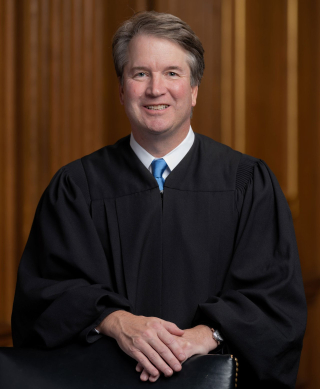
Moreover, I’m not sure what arbitration scheme he is referring to. Counsel for the employees, Jennifer Bennett, ably showed that Justice Kavanaugh was just wrong about why seamen and transportation workers were exempted from Section 1. The arbitration schemes that he references were nothing like the FAA. They provided only an option for arbitration as an alternative to litigation after a dispute arises. She then goes on to argue that the FAA has no requirement that “transportation workers” be employed in the “transportation industry.”
I have a different take. On my reading of the legislative history of the FAA, the drafters expected it to apply exclusively among business people. They never wanted it to apply to employment agreements and they never expected arbitration agreements to come in the form of contracts of adhesion. As the drafters explained the purposes of the FAA to the Senate, “It is purely an act to give the merchants the right or the privilege of sitting down and agreeing with each other as to what their damages are, if they want to do it. Now, that is all there is in this.”
Justice Kavanaugh is right that the drafters of the FAA assumed that there would be an alternative arbitration scheme for employment agreements. It was state arbitration statutes such as Connecticut’s. Congress had no power in the 1920s to legislate on the subject of employment agreements that did not implicate interstate commerce as that phrase was understood at the time. At the time, it was quite narrow. So the exemption in Section 1 was not meant to protect employees in the transportation industry from arbitration in unique ways. It addresses the only category of workers whose employment agreements might be subject to arbitration and provides that they are exempt. Nobody thought in 1925 that the FAA would apply to other employment agreements. That was a matter for state arbitration statutes.
However, if, as may be the case here, the employer has not properly provided for arbitration consistent with the state statute, well then, litigation it is! Even if arbitration under state law is appropriate, not all states permit employers to ban class representation through arbitration clause bootstrapping, so a return to the original public meaning of the FAA (see what I did there!) could effect a substantive change in the arbitration law landscape.