
Force Majeure, COVID, and a Win for Lizzo
I‘ve long been on the hunt for a case that illustrates the interaction between a force majeure clause and the COVID-19 pandemic. This might be the one. It also makes use of the surplusage canon of construction, so if one has the time to work through a lengthy force majeure clause, it could be a useful teaching case.
In 2019, VFLA Eventco, LLC (VFLA) announced that there would be a two-day music festival, the Virgin Fest Los Angeles in June 2020. In February and March, 2020, VFLA entered into contracts with agencies representing Ellie Goulding, Kali Uchis, and Lizzo (collectively the Artists). William Morris Endeavor Entertainment, LLC (WME) acted as the agent for all three artists and negotiated the contracts on their behalf. The contract provided that WME should not be liable under the contract, and there was a force majeure clause. In this clause, VFLA is the “Purchaser” and the agencies representing the Artists are the “Producer”:
A ‘Force Majeure Event’ means any act beyond the reasonable control of Producer, Artist, or Purchaser which makes any performance by Artist impossible, infeasible, or unsafe (including, but not limited to, acts of God, terrorism, failure or delay of transportation, death, illness, or injury of Artist or Artist’s immediate family (e.g., spouses, siblings, children, parents), and civil disorder). In the event of cancelation due to Force Majeure then all parties will be fully excused and there shall be no claim for damages, and subject to the terms set forth herein, Producer shall return any deposit amount(s) (i.e., any amount paid to Producer pursuant to the Performance Contract prior to payment of the Balance) previously received (unless otherwise agreed). However, if the Artist is otherwise ready, willing, and able to perform Purchaser will pay Producer the full Guarantee unless such cancellation is the result of Artist’s death, illness, or injury, or that of its immediate family, in which case Producer shall return such applicable pro-rata portion of the Guarantee previously received unless otherwise agreed.
[Italics added] This language was negotiated and had been updated based on a model used for another event. The language that I have italicized was new language inserted by WME and agreed to by VFLA.
VFLA transferred to WME’s trust account nonrefundable deposits of $400,000 for Kali Uchis, $600,000 for Goulding, and $5 million for Lizzo. The deposits were consideration for the artists’ performance at Virgin Fest, as well as for exclusivity and advertising rights, which allowed for the use of their images for Virgin Fest’s marketing materials and subjected the Artists to certain restrictions on public performances in temporal or geographic proximity to the Virgin Fest.

And of course, the whole Virgin Fest was shut down because of COVID. VFLA sought the return of the deposits, and the parties disagreed as to the meaning of the force majeure clause. After discovery, the parties filed motions for summary judgment. The trial court granted summary judgment in favor of WME and the Artists and denied VFLA’s motion. The language of the force majeure clause had been revised to favor the Artists.
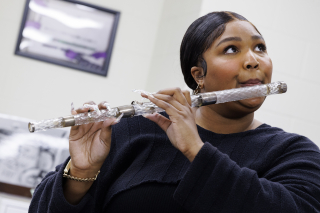
By Library of Congress Life
In VFLA Eventco, LLC v. William Morris Endeavor Entertainment, LLC , a California appellate court affirmed. The appellate court broke down the force majeure clause according to its three sentences. The first sentence defines “force majeure,” and the parties do not dispute that the pandemic was a force majeure event. The meaning of the second sentence was also not in dispute — the Artists had to return the deposits in case of a force majeure event unless another performance term applies.
The dispute centers on the third sentence, which states that the Artists do not have to return the deposits if they are “otherwise ready, willing, and able to perform.” The Artists contend that the best reading of this language is that, but for the force majeure event, they would perform, which is clearly the case. VFLA reads “otherwise” to mean something more like “notwithstanding.” In the court’s view, the Artists reading is the better one, as VFLA’s reading would “deprive the third sentence of any meaning and render it surplusage.” The Artists could never show that they were ready, willing, and able to perform notwithstanding a force majeure event, which is defined as any event that renders performance “impossible, infeasible, or unsafe.”

Personally, I don’t think there is a reading that would avoid rendering some part of this language surplusage. If one of he artists dies, she is definitely unable to perform and so the third sentence would not apply at all. VFLA instead argued that if it had intended to accept all risk of a force majeure event, unless it involved death, injury, or illness of an artist or a family member of an artist, it could have drafted a much shorter provision. The court conceded the point but the fact that the provision could have been better drafted is no reason not to give effect to its most likely meaning.
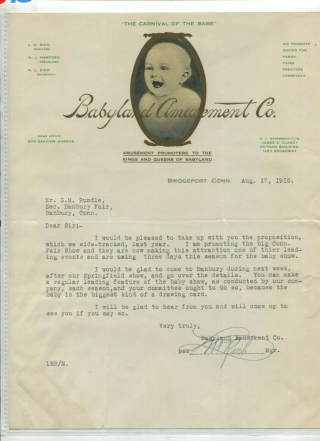
There are other parts of the opinion that I would also omit if I were to use this as a teaching case. The court addresses VFLA’s claim that the Artists have not proved that they were ready, willing, and able to perform, even though that issue had not been preserved. VFLA alleges that a ruling in favor of the Artists would effect a forfeiture, but a forfeiture requires a breach, and because of the force majeure clause, the Artists are not in breach. VFLA’s argument that allowing the Artists to keep the deposits would render the contract illegal provides an interesting hypo along the lines of Hanford v. Connecticut Fair Association, a case involving the Babyland Amusement Company (whose letterhead appears above). In deciding that the Artists can keep their deposits (the opposite result from Hanford), the court is not promoting illegality; it is merely giving effect to the parties’ contractual allocation of risk.
And this really is a case that comes down to allocation of risk. Just as I think it absurd that a college football coach should be paid $75 million for not coaching (or for coaching, but that’s another matter), I think it absurd that Lizzo should get $5 million for not performing. But apparently it was so important to VFLA to secure Lizzo as a performer so that it could generate an audience for its music festival that VFLA was willing to take the risk of losing that $5 million in case of cancellation. In the alternative, VFLA agreed to contractual language that forced it to take on more risk than it intended. Either way, it should be bound by its objective manifestations of assent.
Absent evidence that the allocation of risk was commercially unreasonable (another canon of construction), it seems like the court got it right. It does not seem that VFLA made a commercial unreasonableness argument. I lack the industry-specific knowledge to judge whether it is commercially unreasonable to pay a seven-figure, non-refundable deposit to an artist to secure their commitment to perform at a music festival.