
Divided Ninth Circuit Panel Sends Claims Against Airline to Arbitration
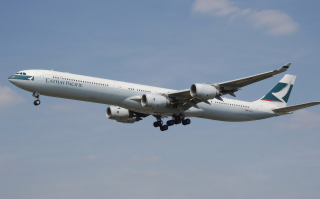
While they were traveling, Cathay Pacific canceled their return trip. A Cathay Pacific employee advised them to book with another carrier, assuring them that they would receive a refund, and they did so. Through ASAP, the Herreras requested their refund, but they were offered only travel vouchers valid for a limited time. By then, because of the COVID pandemic, it was clear that the Herreras would not be able to use the vouchers. Cathay Pacific maintains that it never received a refund request form the Herreras or ASAP.
The Herreras filed a class-action complaint alleging that Cathay Pacific was in breach of contract under the terms of its General Conditions of Carriage for Passengers and Baggage (GCC). The GCC provides for refunds in case of cancellations unless otherwise provided under the Montreal Convention or the GCC’s Article 11. The GCC contained no arbitration clause.
In response to the Herreras’ complaint, Cathay Pacific moved to compel arbitration based on equitable estoppel, relying on ASAP’s terms and conditions. The District Court denied the motion, as the Herreras’ claims did not arise under their agreement with ASAP. Cathay Pacific took an interlocutory appeal.
The Court first addressed plaintiffs’ tardy argument that Cathay Pacific could not compel arbitration because 14 C.F.R. § 253.10 provides:
No carrier may impose any contract of carriage provision containing a choice-of forum clause that attempts to preclude a passenger, or a person who purchases a ticket for air transportation on behalf of a passenger, from bringing a claim against a carrier in any court of competent jurisdiction, including a court within the jurisdiction of that passenger’s residence in the United States (provided that the carrier does business within that jurisdiction).
The Majority rejected this argument because Cathay Pacific is not imposing a choice-of-forum clause on the Herrera’s through the GCC. It is doing so through “applicable law,” and the regulation doesn’t say anything to prevent a carrier for doing so. That would really annoy me as exhibiting the sort of “lawyerly” reasoning that allows smarmy well-resourced parties to evade the purpose of regulation. However, the dissenting opinion points out that the Department of Transportation has interpreted the provision as applying only to domestic flights. Fair enough.
There is no arbitration agreement between the parties, so under California law, Cathay Pacific can only compel arbitration if the Herreras’ breach-of-contract claim against Cathay Pacific is “intimately founded in and intertwined with” ASAP’s Terms & Conditions containing the arbitration clause. The Majority reasoned that when Cathay Pacific directed the Herreras to make their refund request through ASAP, they made the latter a “middleman” for refund purposes. Cathay Pacific alleges that it never received a refund request from ASAP and thus never imposed any restrictions on the Herreras’ refund. ASAP may have done so in violation of its terms and conditions, and that is why any claim against Cathay Pacific is intertwined with those terms and conditions.
Ultimately, estoppel comes down to fairness. The Herreras say it is not fair to compel arbitration in these circumstances, but the Majority disagrees. Article 11 of the GCC allows Cathay Pacific to reimburse ASAP and to direct the Herreras to recovery from ASAP. Cathay Pacific did indeed so direct the Herreras. The Herreras got discounted tickets through ASAP. In return they agreed to an arbitration clause. There is nothing unfair about giving them what they bargained for.
The Majority thus found that the Herreras were equitably estopped from resisting Cathay Pacific’s motion to compel arbitration. There is a strong dissent, questioning whether there are undisputed facts establishing that all aspects of the Herreras’ claims are intimately founded in and intertwined with its agreement with ASAP.