
Matthew Sluka: More NILs; More TroubILs
It’s a refreshing story about how providing support for young athletes enable them to pursue their dreams of university education.
No, it’s not that.
It’s a refreshing story about how the NCAA’s rules allowing student athletes to benefit from Name, Image, and Likeness (NIL) deals is facilitating support for the students who make college athletics so fun and exciting.
No, it’s not that either.
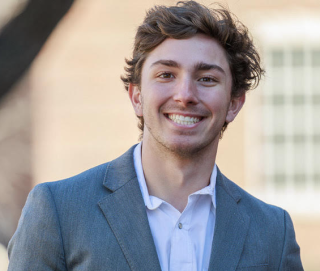
According to Pete Thamel and Adam Rittenberg, writing on ESPN.com, UNLV quarterback Matthew Sluka has left his team after three games because the athletics supporters, also known as the “UNLV’s collective,” who made oral pledges of an NIL deal did not deliver. Mr. Sluka was allegedly promised $100,000, but the team’s head coach refused to honor the promise, which was oral and did not come from him but from an assistant coach.
The news coverage of this story makes much of the fact that that promise was oral, but that is only relevant for evidentiary reasons. Contracts only have to be in writing if they are within the statute of frauds, and this contract was not. It would have to be in writing the parties were contemplating that Mr. Sluka would be UNLV’s quarterback for many years, but he only has one year of eligibility remaining. And the team’s head coach seems to have acknowledged that the promise was made by the offensive coordinator, so we don’t really have an evidentiary problem.
We do have an agency problem. Likely the assistant coach would not have actual authority to bind the university, but he might have apparent authority. However, because players are paid by collectives rather than by universities, it may be that he lacked even that. I suppose it depends on what a college athlete in Mr. Sluka’s position would be expected to know about the way these deals are structured. I suspect that they know a hell of lot more about this world than I do, and Mr. Sluka was represented by an agent. Would a reasonable agent know that an assistant coach can’t promise $100,000 on behalf of the collective?
The collective paid Mr. Sluka $3000. UNLV paid Mr. Sluka $3000 for moving expenses. Mr. Sluka’s agent for some reason acknowledges that the only “formal offer” from UNLV was $3000/month for four months. Believing he was entitled to more, Mr. Sluka threatened to quit if UNLV and its collective did not make good on their alleged promises. UNLV does not respond kindly to threats. According to ESPN, it “interpreted these demands as a violation of the NCAA pay-for-play rules, as well as Nevada state law.”
Under NCAA rules, Mr. Sluka, having played only three games, can “redshirt” and thus preserve his eligibility for another season. According to an earlier ESPN.com report, he had already been at Holy Cross for four years before coming to UNLV. I guess it doesn’t matter if it takes a quarterback six years to graduate college. [Update: an alert reader pointed out that Mr. Sluka already got his undergraduate degree from Holy Cross; he is now pursuing a graduate degree.] None of the reporting mentions Mr. Sluka’s course of studies, his major, or what he would like to do with his college degree, assuming he does not become a professional athlete. He does not seem to be attending college with the primary aim of getting an education.
It’s all very confusing. Where was Mr. Sluka’s agent when it came time to formalize the promise? To make matters more confusing still, the NCAA, in an attempt to head off an antitrust suit, seems poised to allow colleges to pay their students directly, eliminating the need for “collectives.” That’s probably a good thing, because it seems very likely that the NIL agreements are really just means for allowing local boosters to pay student-athletes, disproportionately football players, it seems, to attend particular schools. That model, one can imagine, creates a complicated relationship among coaching staffs, players, and boosters, with the latter suddenly assuming a position similar to that of equity investors. For example, Kalan Hooks reports for ESPN that car dealerships are frequent sponsors of NIL deals. But at the University of Utah, eighty-five football players on scholarship received leases for pickup trucks.
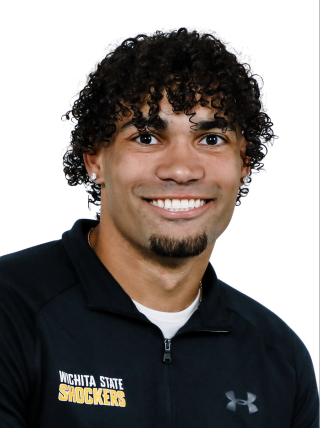
In its first game without its star quarterback, UNLV won by a score of 59-14. The backup quarterback completed 13 of 16 passes for 182 yards and three touchdowns. He also rushed for 119 yards and a touchdown. Rebel fans will have to hope that he doesn’t start looking around for an NIL deal.
We wouldn’t have this problem if we in the United States were just normal about sports and did not think of universities as bloated justifications for semi-pro leagues funded by boosters’ donations. No other country in the world does sports this way, people! We want young athletes to have access to higher education, but if we had real development leagues, such young athletes could pursue their professional dreams and get paid sufficiently to also attend universities if that’s what they wanted to do. They could do so either as part-time students or, after their careers, when they were older and better able to get the most out of the educational experience.
Universities could still adopt local teams as though they were their own. After all, many big-time college sports programs are based in small towns that would not be able to attract a sports team if they were not college towns. Here, in Oklahoma, the most popular teams are located in Norman and Stillwater. They could continue to be there, even if those teams were part of the “SEC Development League” or whatever. Just for starters, that would save Oklahoma taxpayers $15 million because they would no longer have to pay the salaries of the head coaches at those schools. Or perhaps that money could be put to some use at those universities in the form of scholarships for deserving students or resources to serve their educational needs.
I just had to say it. As you were.