
Fourth Circuit Upholds Summary Judgment in Favor of Zion Williamson
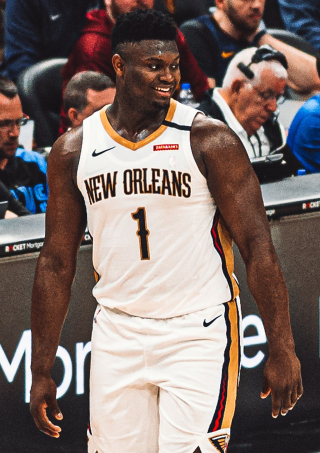
Zion Williamson (right) played one season as a student-athlete at Duke before announcing his intention to enter the NBA draft. After his last game at Duke, he entered into a five-year agreement with Prime Sports Marketing LLC., through its president, Gina Ford (collectively Prime). Prime was to act as Mr. Williamson’s agent, and the parties worked together for a few weeks. Mr. Williamson’s parents then notified Prime that he was terminating the agreement, and he signed a contract with a rival agency with whom he had shared the details of his arrangement with Prime.
Mr. Williamson sought a declaratory judgment that his contract with Prime was unenforceable. Prime counterclaimed alleging a variety of claims against Mr. Williamson. Mr. Williamson pointed out that his contract with Prime was illegal under two provisions of the North Carolina Uniform Athlete Agents Act (the Act). Prime did not dispute the substance of Mr. Williamson’s argument. The contract was not in conformity with the Act. However, Prime contended that the Act did not apply because Mr. Williamson was no longer a student-athlete at the time the parties entered into their agreement.
The District Court denied Prime’s motion to dismiss and then, after discovery, granted Mr. Williamson’s motion for summary judgment. Prime appealed, and on May 6, 2024, the Fourth Circuit affirmed the judgment in Mr. Williamson’s favor in Williamson v. Prime Sports Marketing, LLC.
Much like Judge Friendly’s opinion that started with “What is a chicken?”, the Fourth Circuit’s analysis begins with the question, “Who is a student-athlete?” No North Carolina court had construed it. The Court’s task was to figure out how a hypothetical North Carolina court would define the term. The Act defines the term as follows:
An individual who engages in, is eligible to engage in, or may be eligible to engage in any intercollegiate sport. If an individual is permanently ineligible to participate in a particular intercollegiate sport, the individual is not a student-athlete for the purposes of that sport.
Prime’s main argument turned on the second sentence of the definition, but the court, deploying the canon of construction against superfluity, found that the second sentence applies to multiple-sport student-athletes, which Mr. Williamson was not. In discussing this argument, the Court does not explain with respect to what particular intercollegiate sport Mr. Williamson was permanently ineligible. That factual predicate is provided in the Court’s discussion of Prime’s next argument.
Prime argued that Mr. Williamson’s violations of NCAA rules rendered him “permanently ineligible” to engage in intercollegiate sport. Mr. Williamson has violated the NCAA’s amateurism rules by accepting money to play basketball. However, the Court found that the NCAA and its member schools exercise discretion. Violations of NCAA rules may render a student permanently ineligible, but they do not do so automatically. The schools and the NCAA have discretion. Prime had a bunch of other arguments but the Court found that none of the prior caselaw on which it relied was applicable to these facts.
Having determined that Mr. Williamson was a student-athlete at the time he signed with prime, the Court found that the contract was void. The District Court correctly granted Mr. Williamson’s motion on the pleadings and correctly granted Mr. Williamson summary judgment on Prime’s breach of contract, fraud, and misappropriation of trade secret claims. Because the underlying contract between Prime and Mr. Williamson was illegal, he violated no duty by sharing Prime’s documents with a rival agency. Finally, Prime’s marketing materials were not trade secrets.
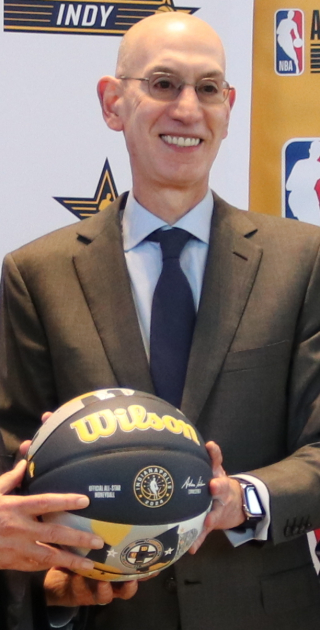
I’m not sure what the solution is. Here’s an idea from someone with very limited knowledge of the industry. Professional sports associations are rolling in money. NBA Commissioner Adam Silver (left) earns an estimated $10 million a year. The average NBA team is valued at $4.4 billion. Surely there is enough money floating around to set up an independent non-profit to advise and even represent college athletes. If there is concern about the leagues capturing the non-profit, have the NBA players’ association kick in support and leadership. Set up an independent governing board to insulate the non-profit from influences that might be adverse to those of the young, aspiring athletes. The same model could be adopted in other professional sports associations.