
Reviewing Larry DiMatteo, Principles of Contract Law and Theory, Part X
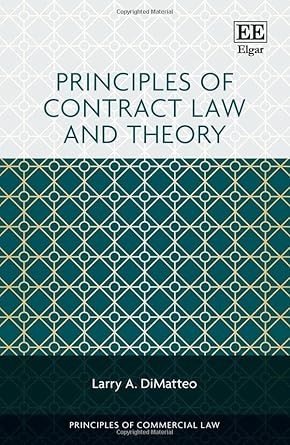
This is the tenth post in my series on Larry Di Matteo‘s Principles of Contract Law and Theory (Principles). The aim is to call some attention to this book while using it to stimulate my thinking as I once again consider how to teach contracts law to first-year students. Principles is a scholarly textbook addressing advanced topics at a very high level of sophistication.
Chapter 10 of Principles is the first chapter of Part IV, which covers contracts theory. The book has strong historical, comparative, and theoretical themes, so it feels like we have been working up to this part, where Professor DiMatteo gets to explored topics about which he is especially passionate. Chapter 10 focuses on legal history and theories of legal development. The chapter was fun for me, as it introduced me to theories of legal development to which I have never previously been exposed.
Professor DiMatteo rejects the economics and law account of the law moving towards greater economic efficiency. Some rules that lead to inefficiency have been shed; others are retained. (240-41)
Professor DiMatteo then reviews the tripartite divisions of the law proposed by Karl Llewellyn, Grant Gilmore, and Ian Macneil. (243-44) Benjamin Cardozo seems an outlier in this company, as his view is that there is one Anglo-American tradition of judging: follow the law in easy cases and make new law in hard cases. (244-45) Anticipating his book’s final chapter, Professor DiMatteo seems partial to Cardozo’s view, echoing Lord Mansfield’s, another jurist to whom Professor DiMatteo returns with frequency, that the law as written responds to the law in action. (245-47)
The first post in this series can be found here
Part II is here.
Part III is here.
Part IV is here.
Part V is here.
Part VI is here.
Part VII is here.
Part VIII is here.
Part IX is here.