
Reflections on Poker, The Melian Dialogue, and the Transactional Presidency
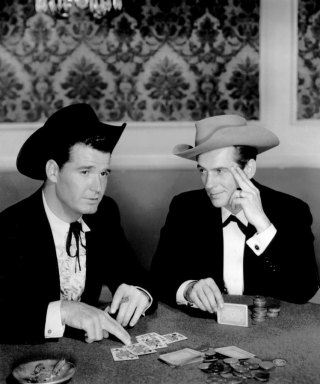
The penultimate time I was played, I was in a game with someone reputed to be a “serious poker player.” I am a novice. He and I were the last ones in a hand, and it was the biggest pot of the night, which may have been ten or fifteen dollars total. People from the other table came to watch. The serious poker player raised by putting in $20, and there were appreciative grunts. “Nice bet,” men said in hushed tones. I was astonished. I had come for a friendly game; now I was in a pissing match. I folded, disgusted that I had been forced to succumb to a compelled surrender. The alternative was to participate in a game that I had no interest in playing. That was my last hand. Afterwards, I asked my friend who had invited me how a $20 bet was consistent with the spirit of the “friendly game.” He shrugged, suggesting a grasp of situational ethics that eluded me.
He lured me back one last time. I got very lucky early and soon had stacks of chips in front of me while the other players struggled. I quickly realized that I could win any hand I wanted by bluffing, raising the pot beyond what they could match, and forcing them to fold. I did it once, found the experience soul-deadening, and took my leave at the first opportunity. I came out even. I made no friends; I lost none. The friend who had invited me was a Lutheran Pastor. He accepts people warts and all, and I remain happy that he was willing to be my friend on those terms.
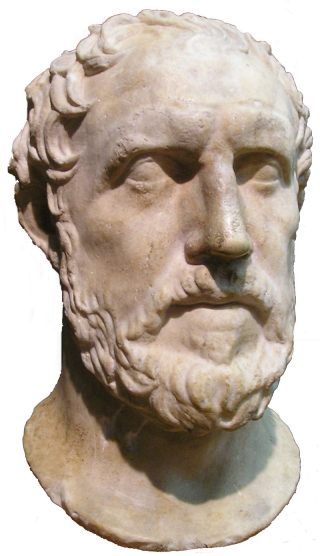
The Melians refuse to surrender on the Athenians’ terms, which would have involved an obligation to pay tribute to Athens, something the Melians equated to enslavement. The Athenians besieged Melos and, after “some treachery” which presumably allowed some Athenian forces to enter the city, the Melians surrendered. Melian men of military age were put to death. All others were sold into slavery, and 500 Athenians settled in Melos. All was justified under a logic of self-interest. Such is the logic of warfare.
Our current President thinks himself a master negotiator, but his successes have the structure of a compelled surrender. The Athenians demanded surrender from parties that desired to remain neutral; the President seeks to compel surrender from U.S. allies. He threatens our trading partners with harmful tariffs, knowing that for all his denigration of the previous administration, it handed over to him an economy that is the envy of the world. Resting on that strength, the President seeks to compel our partners, whose economies are more vulnerable, into concessions, which so far seem to be entirely symbolic. He thus projects strength and proclaims victory. Our trading partners will not risk 25% tariffs by pointing out that the President’s bluster and brinkmanship have created economic uncertainty but no real substantive change.
The President has been more successful in extracting concessions from the media. As Maggie Haberman and Kate Conger report in The New York Times, media companies have settled the President’s extraordinarily weak claims against them. ABC paid $15 million; Twitter paid $10 million; Meta paid $25 million. As Ariel Zilber reports in The New York Post, Amazon paid $40 million for the rights to a “documentary” involving Melania Trump. The next highest bid was $14 million, as Apple and Netflix declined to participate. Even assuming that $14 million is a reasonable price for this material, the extra $26 million seems like a very generous tip. However, it is not clear how the United States benefits from these transactions. Nor is it clear how the country or New York City benefit from the President’s crass bargain with New York’s mayor.
It is possible to read Thucydides as suggesting that the war itself, not the Spartans, defeated Athens, as the Athenians’ conduct of the war rendered them indistinguishable from the Spartans. Athens adopted the Spartan approach to negotiation. Early in the war, the Spartans promised to judge the Plataeans fairly upon their surrender. Instead, the Spartans asked the survivors only what services they had provided to the Spartans and their allies during the conflict. Having truthfully answered that they had performed no services for their enemies, two hundred Plataeans were put to the sword. The Athenians were more windy at Melos, but the result was the same.
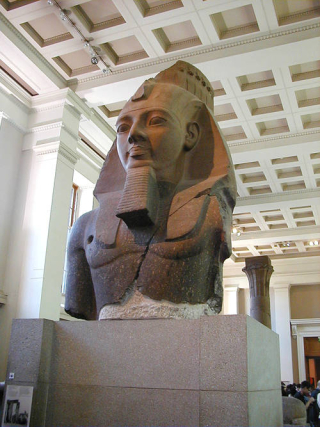
I can easily imagine a not-too-distant future in which a fifth head is added to Mount Rushmore, accompanied by Ozymandius’s motto.