
DC District Court Concludes It Has No Jurisdiction over Claim to Nazi-Looted Art
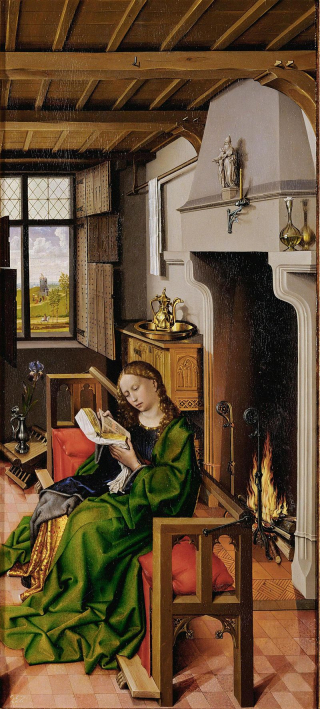
The statue in question was part of the Herzog Collection which survived intact until 1944 when the Hungarian government cooperated with the Nazis in its seizure. Since 1949, the statue has been in the possession of Hungary’s Museum of Fine Arts. The museum’s website describes the statue as follows:
According to the legend, Saint Barbara, who lived in the third century, was locked up in a tower by her own father, a heathen. Barbara, however, secretly converted to the Christian faith and later suffered a martyr’s death. The statue of the saint, who is depicted holding her attributes (namely a tower and a palm branch symbolising her martyrdom), was probably been made in the early sixteenth century and can be linked with the art of Michel Colombe, a sculptor working on the border between late Gothic and early Renaissance. The work can be placed among the statues made in the Bourbonnais region under the influence of Colombe. It has the typical features of the so-called Bourbonnais facial type: the curly hair parted in the middle, the convex forehead, the small almond-shaped eyes, and the narrow mouth. The nearest analogy is a stone statue of Saint Barbara in Jaligny, but in terms of artistic quality the work is closest to the art of Jean de Chartres, a pupil of Colombe.
Like in the case from two weeks ago, foreign sovereign immunity posed a barrier to recovery. In addition, in this case, the court also concluded in the alternative that it lacked jurisdiction under the forum non conveniens doctrine.
Hemmed in by previous decisions relating to the requirements of the Foreign Sovereign Immunities Act (FSIA), the Court had to determine whether plaintiffs’ prior claim that their predecessors were de facto stateless precluded them from climaing that their predecessors were de jure Hungarian citizens at the time the Santa Barbara statue was stolen. The Court concluded that plaintiffs were not estopped.
However, that victory could get plaintiffs from the frying pan to the fire. If plaintiffs’ predecessors were Hungarian citizens and the Hungarian officials stole the Santa Barbara, plaintiffs’ claims would be barred under the domestic takings rule. Here, plaintiffs created a factual issue as to whether it was the German authorities or the Hungarian authorities that took the sculpture. In fact, the evidence suggests that the Germans were responsible, and so the domestic takings rule would not bar recovery.
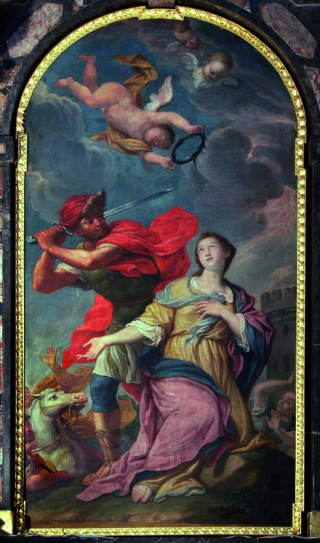
In the alternative, the Court also dismissed the claim based on forum non conveniens. While a previous judge had rejected defendants’ forum non conveniens argument, the facts had changed. The only remaining plaintiffs in the case are now both Italian nationals residing in Italy. The statue remains in Hungary, and the Court concluded that Hungary is the more convenient forum in which the parties can litigate the claims relating to the Santa Barabara sculpture.
For whatever its worth, the Court rejected many of Hungary’s alternative arguments for dismissal. Plaintiffs could not have pursued their claims in Hungary, and so they were not subject to an exhaustion requirement. The Court also declined to declare plaintiffs’ claims time-barred at the summary judgment stage. Some of those holdings might prove useful should the Court’s main holdings be overturned on appeal.