
District Court Finds White House Cannot Fire Independent Counsel by Executive Order
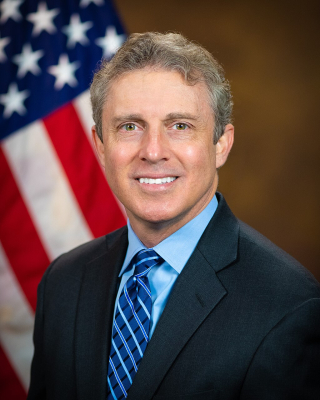
Bessent v. Dellinger has already made its way to the shadow docket of the U.S. Supreme Court (SCOTUS). A District Court entered a temporary restraining order (TRO) enjoining the government from firing Mr. Dellinger (right), who is the Special Counsel in the Office of Special Counsel, which protects federal whistle blowers. TROs are generally not appealable. The government brought an emergency motion to stay that TRO, first before the D.C. Circuit Court and then, citing the All Writs Act, before SCOTUS. After providing a procedural history of the case, Chief Justice Roberts, writing for the majority, decided “in light of the foregoing,” to hold the case in abeyance, pending further action from the District Court. Two liberal Justices would have denied the application for review. Two conservative Justices dissented from the “holding in abeyance” because the District Court did not provide adequate explanation of the equitable grounds for its grant of relief.
And it was still 5-4.
This is peak shadow docket. The two liberal Justices who wrote separately would have done something for no reason. The two dissenting conservative Justices would have done something else because the District Court did something for no reason. “That’s our move!” cry the dissenters.
Well, over the weekend, the District Court gave its reasons in Dellinger v. Bessent, permanently enjoining the Administration from firing Mr. Dellinger, who by statute may only be removed for “inefficiency, neglect of duty, or malfeasance in office.” The curt letter that notified Mr. Dellinger of his immediate dismissal gave no reason at all. This doing something for no reason thing is contagious.
We are interested in this case as it touches on statutory protections for employees of the federal government, and so there is not much more to say that is of interest from the perspective of contracts law. This is the tip of the iceberg as far as the litigation goes. The Administration’s legal argument that it is entitled to remove employees of the executive branch notwithstanding statutory protections rests on the Unitary Executive Theory, recently discussed by Cass Sunstein in The New York Times. My own humble contribution on this subject can be found here. Ultimately, the Court will decide whether it is consistent with the structural Constitution for Congress to require the President to give some reason for sacking the person tasked with protecting federal employees who allege wrongdoing within the federal bureaucracy from retaliatory conduct, perhaps by the alleged wrongdoers.
In sum, it would be antithetical to the very existence of this particular government agency and position to vindicate the President’s Article II power as it was described in Humphrey’s Executor: a constitutional license to bully officials in the executive branch into doing his will.
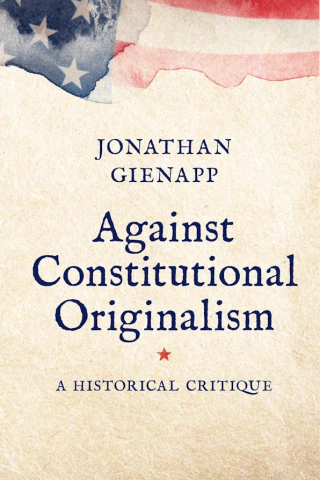
The citation to Humphrey’s Executor is ominous. As Cass Sunstein notes, the Administration’s Acting Solicitor General has already put Congress on notice of the Administration’s intention to challenge that case. This may be the first case to make it to SCOTUS that will give the Administration a shot at removing all statutory protections of workers at federal agencies. The argument, in short, is that because the Constitution’s Article II vests “all executive power” in a single President, the President must be empowered to both appoint and dismiss any employee within the executive branch. Not all scholars, and not even all originalists, agree that the laconic Article II Vesting Clause demands to be read in that way and that way alone. But if you think that result makes sense or that we are bound by it whether or not it makes sense because . . . originalism, Jonathan Gienapp wants a word.
In my view, this is one of those cases where appealing to original meaning just doesn’t make sense. Eighteenth-century sources tell us nothing about a federal bureaucracy grown vast beyond the Framers’ imagining. In such circumstances, we are left to our own devices. It is appropriate for courts to defer to the constitutional solutions devised by the political branches (see Hamilton in Federalist #78) empowered to liquidate constitutional meaning in practice (see Madison in Federalist #37). In an organization as large as the modern executive branch of our government, it makes sense to have internal ombudsmen, like the Special Counsel, who can check against abuses of power. It also makes sense to insulate those people from arbitrary removal by those whose conduct they review. That has been our practice for decades, and courts bowed to such practices, even when they disagreed with them, going back to Stuart v. Laird (1803).