
Sid DeLong on Congress’s Declaration that Every Day Is Today, March 11th
The Longest Day: The Best Legal Fiction Writer in Congress
Sidney W. DeLong
(March 11, 2025). Some of you may not yet have noticed that on March 11, the Senate declared that March 11 would not end: “Each day for the remainder of the first session of the 119th Congress shall not constitute a calendar day. . . .” In other words, tomorrow never comes: it will forever remain today, March 11, until the end of the 119th Congress.
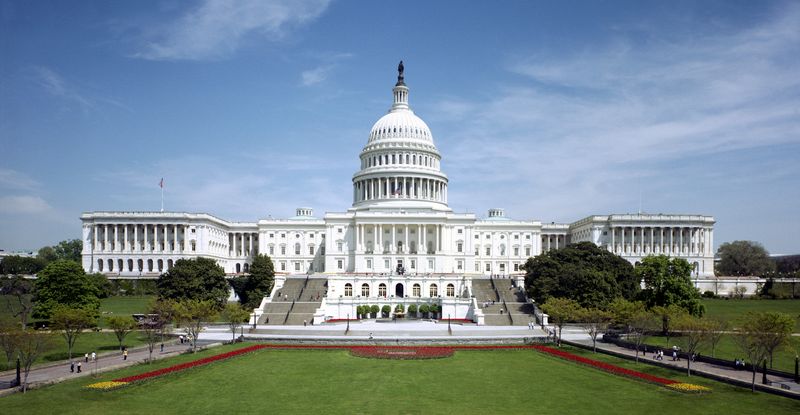
So can you forget that filing deadline on April 15? Well, not exactly. The actual language of the rider the Senate enacted is as follows: “Sec. 4. Each day for the remainder of the first session of the 119th Congress shall not constitute a calendar day for purposes of section 202 of the National Emergencies Act (50 U.S.C. 1622) with respect to a joint resolution terminating a national emergency declared by the President on February 1, 2025.”
The NEA provides the legal authority under which the President can impose tariffs, but only if he first declares a “national emergency,” which he did on February 1. But the Act also provides that Congress may reverse his finding and declare that no emergency exists, which would have the effect of terminating the tariffs. The GOP senators find this power oppressive: they do not want to have to openly choose between validating tariffs that are unpopular with their constituents (on the one hand) and risking the wrath of the President by ending them (on the other). Democrats naturally want to force Republicans to make this choice and have introduced a resolution to force a vote.
According to Congress.gov: “Upon introduction and referral of a termination resolution, the NEA directs committees to report the measure within 15 calendar days. A privileged motion to discharge becomes available in the House if a committee has not reported within this period of time. In the Senate, the committee of referral is automatically discharged after the expiration of the 15-calendar-day consideration period.” By introducing a motion for a joint resolution terminating the emergency, Democrats triggered this 15-day deadline for considering their motion and the clock started ticking.
But what if time suddenly stopped, so that the 15 days would never elapse? Can Congress stop time by fiat? They did exactly that when they said “Each day for the remainder of the first session of the 119th Congress shall not constitute a calendar day for purposes of section 202 of the National Emergencies Act.” Those mounting days just ceased to exist. “Each day . . . shall not constitute a . . . day.”

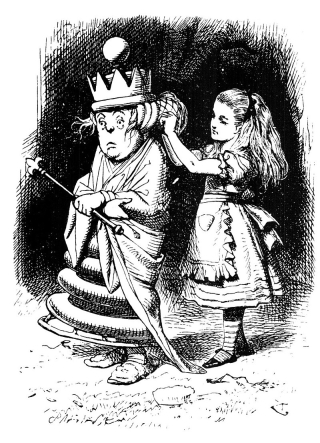
Who would believe such a thing? Lawyers, that’s who. Unlike ordinary mortals but like the White Queen (below right) in Through the Looking Glass, lawyers steeped in legal fictions can believe six impossible things before breakfast. As Lon Fuller stated, a legal fiction is a statement that is known by everyone to be false but that is treated legally as if it were true.
Although this was a blatant falsehood, the allegation could not be denied and so was true as a matter of law. This particular legal fiction was also very useful. It enabled London to become the center of international maritime law. Parties litigating a collision between two ships in the Caribbean got the benefit of British maritime law by pretending that the collision happened in the shadow of Big Ben.
Such geographical fictions today are rare. But today’s lawyers are comfortable with all sorts of legally fictional time. Statutes of limitations are “tolled” or held in suspense for various periods of time. Filings of financing statements are deemed to “relate back” to a time before they were filed and then are deemed to have given “constructive notice” to people who had purchased the collateral before the notice was filed.
But as these examples illustrate, in the twenty-first century legal fiction writing is a dying art, which makes Section 4’s abolition of time even more impressive. Think of the problem the drafter faced. What can be done about the 15-day deadline for voting on the motion filed by those Democrat rascals? The number is right there in the statute and we cannot amend the statute. The solution called for a magnificent move, thinking so far outside the box. Perhaps the drafter was a sci-fi fan. Or a megalomaniac. Who else would suggest: “Let’s just declare that the days will stop running on March 11.”
Where do you learn to do things like that? Not in my law school, for sure. This kind of genius comes from the gods.
All I know is that for the rest of the year, just like Bill Murray in Groundhog Day, every day I wake up will be March 11.
(March 11, 2025)