
Doing It Wrong (Columbia) and Doing It Right (Georgetown)
On Monday, we contrasted Paul, Weiss’s Neville Chamberlain-esque capitulation to the government with the bravery of a third-year associate who called upon her firm and others like it to stand up to the government. Today, we contrast Columbia University’s capitulation to Georgetown’s resounding articulation of principle in the face of threats from the government that aimed to chill constitutionally protected rights to free exercise and free expression. Columbia needs to get some religion.
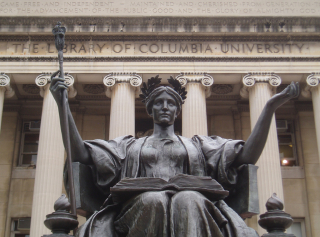
It should go without saying that the federal government has no business meddling in the internal affairs of a private university. It’s a free country. Anybody can criticize university leadership. No doubt, Columbia, like many campuses, in light of last year’s protests, has undertaken significant soul searching about how to balance the rights of free expression, academic freedom, and public safety on campus. Tying research funding to its agreement to adopt the administration’s preferred approach to such matters, at the very least, raises questions at the intersection of private and public law. Columbia could have challenged the government’s authority to tie funding to compliance with the administration’s demands. It is hard to imagine that any court would have upheld the government’s power to withhold funding for scientific research because it likes the smell of pepper spray first thing in the morning on campus visits.
It is not like Columbia had no models for how a university might respond. Interim U.S. Attorney for the District of Columbia Ed Martin sent a threatening letter to the Dean of Georgetown Law School. Here is how Dean Treanor responded in part:
Your letter challenges Georgetown’s ability to define our mission as an educational institution. It inquires about Georgetown Law’s curriculum and classroom teaching, asks whether diversity, equity, and inclusion is part of the curriculum, and asserts that your office will not hire individuals from schools where you find the curriculum “unacceptable.” The First Amendment, however, guarantees that the government cannot direct what Georgetown and its faculty teach and how to teach it. The Supreme Court has continually affirmed that among the freedoms central to a university’s First Amendment rights are its abilities to determine, on academic grounds, who may teach, what to teach, and how to teach it. . . .
Your letter informs me that your office will deny our students and graduates government employment opportunities until you, as Interim United States Attorney for the District of Columbia, approve of our curriculum. Given the First Amendment’s protection of a university’s freedom to determine its own curriculum and how to deliver it, the constitutional violation behind this threat is clear, as is the attack on the University’s mission as a Jesuit and Catholic institution.
Bravo, Dean Treanor.