
Friday Frivolity: Implied Contracts in Curb Your Enthusiam
In Episode 1 of the Eighth Season of Curb Your Enthusiasm, Larry David (below) and some friends are at an upscale L.A. restaurant which, for some reason, has a buffet. Larry gets the buffet; his friends order off the menu. Larry returns with a plate full of food — shrimp, crabs legs, potatoes. It’s quite a feast. Larry’s agent, Jeff, expresses interest in the buffet, and Larry, in one of his occasional lapses into normal human interactions, invites Jeff to help himself to some of the food on Larry’s plate.
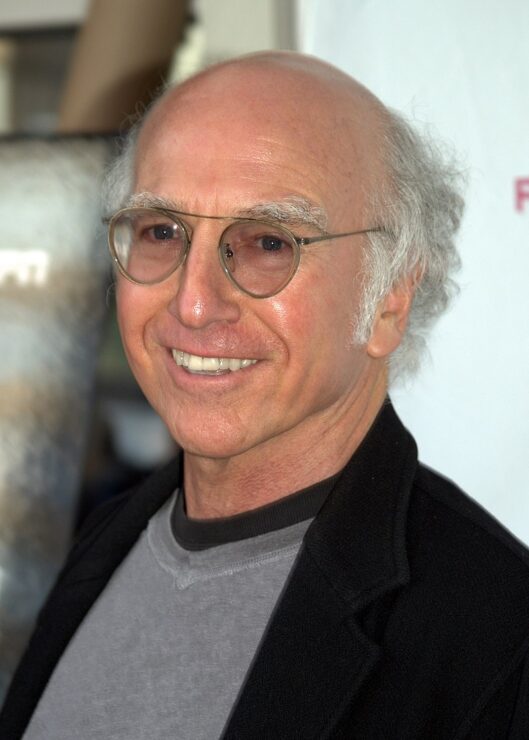
Surprisingly quickly, a restaurant manager appears, and invoking the “implied agreement’” associated with eating at a buffet restaurant, explains that Larry is not allowed to share his buffet food with another guest who has ordered off the menu. The restaurant is going to have to charge the party for two buffets. Larry begins to remonstrate, but a man who introduces himself as Hiram Katz, attorney at law, intervenes. Hiram explains that the food, once taken from the buffet, is Larry’s and it is none of the restaurant’s business what Larry does with it. The manager has no counter-arguments and, at Hiram suggestion, settles the matter by offering an apology and a round of drinks.
Personally, I think the manager has the stronger argument as a matter of the law of implied contracts. The scope of what Larry can do with food that he takes from the buffet is bounded by reasonableness, and it is certainly not reasonable to allow one guest to order the buffet and feed the entire table. Larry objects that he had no plans to return to the buffet for more food, but such matters are better policed with tacit understandings than with gendarmes posted next to each table. Larry is impressed by Katz and eventually hires him as his divorce lawyer. It does not go well.
The implied contract at the buffet is just the first a series of contractual conundrums in the episode. The owner of the L.A. Dodgers asks Larry if he’s interested in seats to a game, sitting in the owner’s box. Larry enthusiastically confirms that he is interested — very interested. Later, for reasons I can’t explain on a family-friendly blog, the owner bars Larry from his house. When Larry tries to explain to the owner’s housekeeper that he has just come to pick up his ticket, she gets him to admit that he had only expressed an interest in the ticket. Lots of people are interested in tickets to sit in the owner’s box at a Dodgers game, but that is not the same as having a ticket.
Here I think Larry has a stronger argument but not a contractual argument. The housekeeper was not there to witness the exchange, but I saw it. As a neutral, third-party observer, I think everyone involved would understand that the owner of the Dodgers had offered Larry a ticket, and Larry accepted the offer. However, he gave no consideration. The ticket was a gift. Showing up at the owner’s house to pick up the ticket just makes him Williston’s tramp with a better wardrobe.
This confusion over formation and intent to be bound then replicates itself in reverse. Larry had expressed interest in buying a lot of Girl Scout cookies from the daughter of the owner of the Dodgers. By the time the Girl Scouts come round to collect Larry’s money, he has had his tiff with the owner and no longer wants the cookies. Larry tries to apply the lesson he learned from the owner’s housekeeper. Expressing an interest in buying cookies is not the same as buying the cookies, or so Larry now reasons.
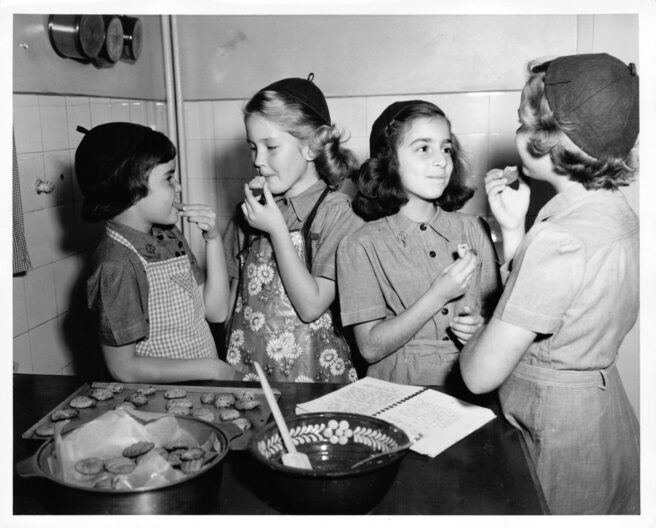
Larry strikes out in this episode, going 0-3 in contracts or contracts-adjacent disputes. He did not just express an interest in buying Girl Scout cookies, he made representations reasonably construed as a promise to pay for selection of such cookies. In exchange, a Girl Scout promised to deliver the cookies. That’s a bargain and a commercial exchange. Larry must pay or be pummeled by a band of outraged Girl Scouts.