
A New York Times Bombshell and the SCOTUS NDAs
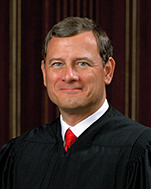
We expressed skepticism in a prior post about the need for and likely efficacy of the decision by the U.S. Supreme Court (SCOTUS) to impose non-disclosure agreements (NDAs) on staff. The fact of the NDAs themselves was disclosed, presumably in violation of the NDA, to The New York Times within months. Now, Jodi Kantor, who wrote the story on the NDAs, has teamed up with Adam Liptak, to provide an account of the birth of the modern shadow docket, also in The New York Times. The account builds on memos that the Justices circulated to one another from 2016. Chief Justice Roberts (below) proposed granting a stay of the Clean Power Plan. The request for a stay had been denied by the D.C. Circuit Court of Appeal.
Although this is a huge scoop for The Times and its reporters, I can’t say that anything in the reporting particularly surprised me. The scoop is the revelation of the information, not the information itself.
Chief Justice Roberts decided to shut down President Obama’s signature climate change regulation. He had decided the merits of the case in advance, without the benefit of argument or briefing, and four of his colleagues agreed with him. Justice Alito did so in a supporting memo that insisted that the Court faced a choice between staying the action and being rendered irrelevant by facts on the ground established through executive action. This was 2016. The Clean Power Plan would not go fully into effect until 2030. The claimed need for judicial intervention was almost farcically fabricated.
Justice Kennedy agreed with the Chief. He too was ready to decide the merits against the government, signaling the swing Justice’s unexplained support for bold action. Three of the liberal Justices explained their opposition to the Court’s peremptory intervention. It is hard to resist the logic of their position, especially given the way the shadow docket has subsequently developed:
- There was no urgent need for the Court’s intervention, as the matter could be stayed by lower courts before the Clean Power Plan took effect upon a showing of irreparable harm;
- There was no record on which the Court could reach a decision on the merits, as the case hand not yet been heard by the D.C. Circuit;
- Intervention on a matter such as this at such an early stage was unprecedented; and
- The government is entitled to a presumption of regularity, and so if the matter is in doubt, the government action should be presumed to be lawful and therefore not subject to a stay.
The last point especially has become ironic, as the Roberts Court has used the presumption of regularity to lift stays on Trump administration actions that are on far shakier legal ground than was the Clean Power Plan. The legal theory underlying the stay in this case was an early version of the major questions doctrine, a court-invented theory far more constitutionally doubtful at the time than the Clean Power Plan.
As to the effect of the NDAs, it reminds me of Uri Gneezy and Aldo Rustichini’s A Fine Is a Price piece. They found that when childcare centers imposed fines on parents for picking up their children late, the parents picked up their children late more often than they had done before the fines were imposed. That is, if late pick-ups are a. problem when they result in a scolding, they become a bigger problem when they result in a fine. Norms are more powerful than contracts. If people feel a moral obligation to engage in action or forbearance, they may feel less of an obligation when it is formalized and the costs for violation are stipulated.
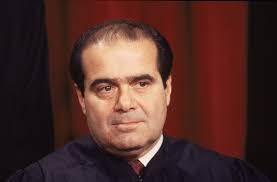
Of course, I have not seen the SCOTUS NDA, but prior to its existence, Justice Scalia (above) used to threaten his clerks that he would hunt them down and destroy their careers if they revealed information that he considered confidential. Whatever the NDA says, it’s not that. Some SCOTUS insiders seem to have decided that the public interest benefit in disclosure outweighs the costs attendant to a breach of the NDA multiplied by the (fractional) risk of discovery of the identity of the breacher. The Justices, for all their wisdom, do not seem to have mastered behavioral economics.