
Update on Anthropic and the Pentagon
In last week’s post, we reported on Judge Rita Lin’s grant of a preliminary injunction enjoining federal agencies from treating Anthropic as a supply chain risk. Yesterday, a three-judge panel of the D.C. Circuit Court of Appeals refused to stay an action by the Department of Defense (DoD) designating Anthropic as a “supply chain risk.”
A quick recap: as we reported here, Anthropic, the company behind Claude, did not want the DoD to use its technology without guardrails in the context of autonomous weapons and surveillance of U.S. citizens. Unwilling to negotiate, the DoD announced that it was terminating its contracts with Anthropic, and then it sought to punish the company through three “Challenged Actions”: (1) a Presidential Directive that no federal agency could work with Anthropic; (2) the Hegseth Directive that DoD would not work with any business that worked with Anthropic; and (3) the Supply Chain Designation, a designation never before applied to a U.S. business entity.
In the D.C. Circuit’s per curiam opinion in Anthropic PBC v. U.S. Department of War [sic], Judges Rao, Henderson, and Katsas denied Anthropic’s emergency motion for a stay of the agency action pending review. The Court ruled that Anthropic had not “satisfied the stringent requirements for a stay pending court review.” However, it granted Anthropic’s motion for expedited proceedings, setting out a briefing schedule to be completed by May 13th. It denied the motion for a stay, despite acknowledging that the Supply Chain Designation is causing Anthropic irreparable harm, and without “broaching” the merits. The equities favor the government because “granting a stay would force the United States military to prolong its dealings with an unwanted vendor of critical AI services in the middle of a significant ongoing military conflict.”
I don’t understand that characterization of what the case is about. The case before the DC Circuit is narrower than the case in the California District Court. On my reading of the Petition for review in the D.C. Circuit, Anthropic is not seeking to prolong its relationship with the DoD. It is seeking an injunction of the Supply Chain Designation, which impairs the company’s ability to work with other governmental agencies and with contractors that work with the government.
The Court characterizes the relief sought as follows: “Anthropic seeks review of the Secretary’s determination under section 4713 to bar the company from providing goods or services to the Department.” That seems to me to be inaccurate. Anthropic has agreed to an orderly “offboarding” [ick] of its technology from the DoD’s systems, which is what the DoD claims it wanted when it canceled its contracts with Anthropic.
Rather, Anthropic seeks to enjoin the DoD from doing further damage to the company by precluding other federal agencies and the contractors that work with those agencies from working with Anthropic. It challenges its the Supply Chain Designation. It is not, as far as I know, demanding that it be allowed to continue to work with the DoD. Anthropic alleges that the Supply Chain Designation is an attempt to punish Anthropic for its speech critical of the government.
The Court acknowledges that DoD has “prohibited its other contractors from using Anthropic as a subcontractor on work performed for the Department.” That is the effect of the Supply Chain Designation that Anthropic seeks to enjoin. The Court continues, “The Department has not prohibited contractors from using Claude for work performed for entities other than the Department.” I’m not sure that is accurate. I mean, the DoD has not literally demanded that other agencies cancel their contracts with Anthropic. However, the Supply Chain Designation may well have the same effect. There are undoubtedly contractors that work with governmental agencies other than DoD that would be prohibited from working with an entity that is subject to a Supply Chain Designation.
Notwithstanding Anthropic’s constitutional claims under the First Amendment and the Fifth Amendment’s Due Process Clause, the Court opines that Anthropic’s harms are primarily financial and that its speech is not chilled while the action is pending. I’m not sure how the Court squares its finding that the harm is financial with its concession that the harm is irreparable. I also don’t understand how violations of the First and Fifth Amendments do not effect irreparable harms in this context. I guess we will find out when the Court reaches the merits.
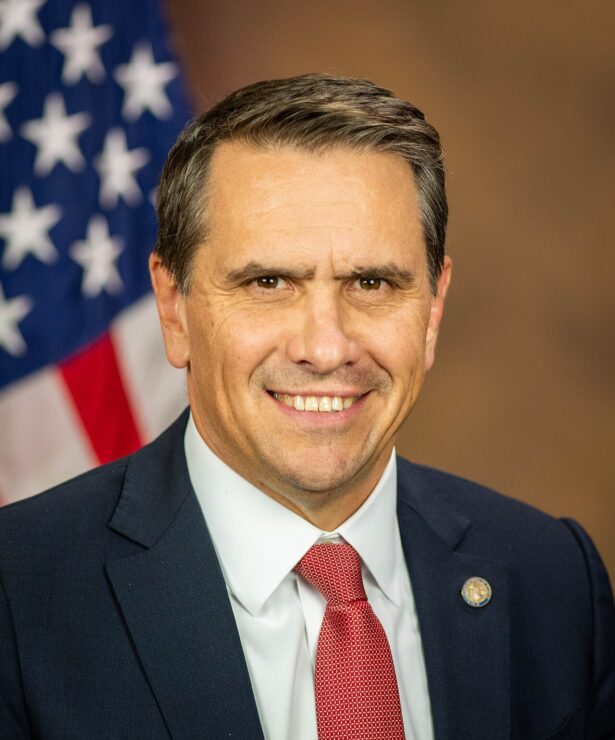
In response to the judgment, Acting Attorney General Todd Blanche (above) stated, “Our position has been clear from the start — our military needs full access to Anthropic’s models if its technology is integrated into our sensitive systems.” How does that even make sense as a response to this lawsuit?
As Mike Isaac reports in The New York Times, the DoD goal, having cancelled its contracts with Anthropic, is to remove Claude from its systems in the next six months. How is that goal consistent with the AAG Blanche’s claim that the DoD needs to keep Anthropic’s technology integrated into its systems? And what does AAG Blanche’s statement have to do with labeling Anthropic a supply chain risk? Why would the DoD want the technology of a company designated as a threat to national security integrated into our defense systems?
Poor Todd Blanche. He can’t even respond to this lawsuit as his predecessor might have. The Dow is no longer at 50,000.