
Ninth Circuit Orders Supertramp’s Songwriting Duo to Give a Little Bit to the Band’s Other Members
There are so many cases like this one. There was a Lynyrd Skynyrd case long ago. There’s Megadeth’s case. We’ve had the Journey case. We’ve done The Romantics’ case. Mötley Crüe signed a death pact, but they soon returned to touring. These cases make me sad, except for Mötley Crüe’s death pact, which was just funny and on brand. One wants the bands of one’s childhood to remain united, as they were in the 1970s (below). It was never about the money. You made some incredible music. That was you at your best. Could you imagine any better life for yourselves? You also made what should have been enough money to sustain you for life. doing something you loved.
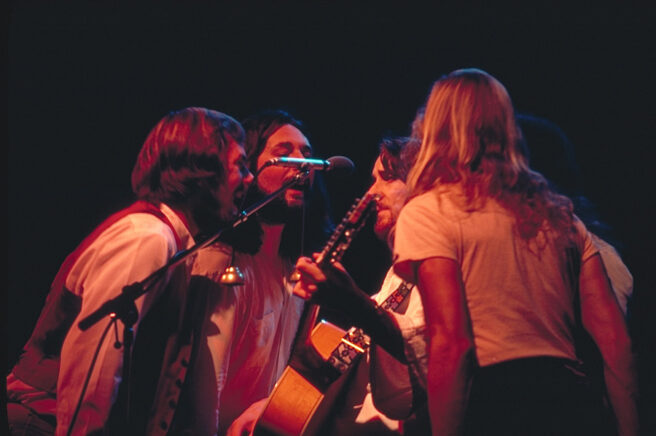
By Rs3 – CC BY-SA 3.0
But no. Record companies front bands a lot of money, and once they recoup their investments, not enough crumbs fall to the artists. Eventually bandmates fall out. Not all band members are created equal. In the case of Supertramp, Rodger Hodgson and Rick Davies, the band’s primary songwriters, formed a publishing company, Delicate Music (Delicate). Forty years later, those two musicians and their company became the Defendants in Campbell v. Hodgson decided by the Ninth Circuit last summer.*
In 1977, the band members agreed that royalties from their songs would be split according to a certain formula and also shared with their manager. Mr. Hodgson and Mr. Davies each were to receive 27% of the relevant proceeds. The other band members and the manager each were to receive 11.5%. Funds were to be distributed through Delicate. Some of these numbers were later adjusted in part. In 2018, Defendants stopped paying their bandmates, and the District Court allowed them to do so. A jury found that the ’77 Agreement had no duration, and the Defendants should be permitted to terminate it, given that a reasonable time had passed.
The Ninth Circuit disagreed and took the District Court to school. Later amendments to the agreement stated that Delicate would continue to pay out under the ’77 Agreement, as amended “in perpetuity.” But the Ninth Circuit’s analysis did not turn on that. Rather, under California law, courts apply a three-step test to determine an agreement’s duration.
Step one is to look for an express duration term. The ’77 Agreement had none. The third step is to make the duration a reasonable time, but before the court gets there, it must first determine whether a duration can be implied from the surrounding circumstances. Here, the District Court committed legal error in allowing the jury to determine that the ’77 Agreement was terminable after a “reasonable time.” The nature of the ’77 Agreement establishes that the parties’ obligations under the contract will exist so long as the “song writing and publishing royalties (and/or other income) derived from the parties’ songwriting and/or publishing activities” continue to flow. That is, copyrights terminate as a matter of law. Until that occurs, the Plaintiffs are entitled to their shares under the ’77 Agreement.
Even if that weren’t the case, Defendants pre-contractual and post-contractual behavior contradict their claim that the ’77 Agreement was terminable at will. They performed under the Agreement for forty years before suddenly asking their bandmates to take the long way home. Indeed, when Mr. Hodgson left the band, he negotiated an amendment to the ’77 Agreement so that he could retain his entitlement to royalties in perpetuity.
I think the Ninth Circuit got things bloody well right. And I really enjoyed listening to the Band’s music while composing this blog post.
*Davies settled in 2023 and died in 2025. The band’s manager, David Margereson, also died in 2025.