
AI May Be Coming for Your Job . . . But Not Just Yet
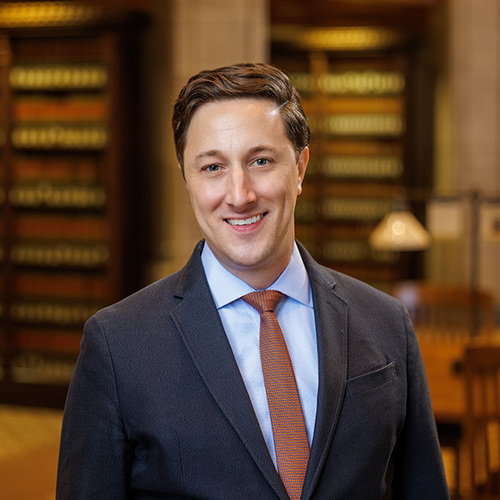
Derek Muller (below) of the Law School of the University of Notre Dame has a Substack called Law School Docket. A recent post draws on an article that appeared on Law.com (subscription required) to tell two divergent stories. One the one hand, AI is supposedly going to gobble up one in five white-collar jobs, including entry-level law jobs in the not-too-distant future. On the other hand, BigLaw still seems desperate for fresh blood.
With Mephistopheles, BigLaw cries:
So viel als ich schon unternommen
Ich wußte nicht ihr beyzukommen,
Mit Wellen, Stürmen, Schütteln, Brand,
Geruhig bleibt am Ende Meer und Land!
Und dem verdammten Zeug, der Thier- und Menschenbrut,
Dem ist nun gar nichts anzuhaben,
Wie viele hab’ ich schon begraben!
Und immer zirkulirt ein neues, frisches Blut.
So geht es fort, man möchte rasend werden!
Der Luft, dem Wasser, wie der Erden
Entwinden tausend Keime sich,
Im Trocknen, Feuchten, Warmen, Kalten! . . .
Despite all my ceaseless striving —
Look around, still all is thriving
Notwithstanding flames and storms,
Earth and sea retain their forms!
And the damned lifeforms that abound,
I’ve put so many in the ground,
And yet they flourish all around,
Encircling me anew with sound
Infuriating, fresh young blood!
From water, air, and earth, they flood,
A thousand germs excude esprit
And render every challenge tame! . . .
[My translation]

By Paul Mathey – Art UK
BigLaw’s search for new talent is evidenced by their willingness to pay 1Ls $25-50,000 to work public-interest jobs during their first summer. This seems to be a strategy to enable firms that want the top talent after the 2L year to prevent those students from working for rival firms as 1Ls. Sure, they can get legal experience during their 1L summer, so long as they don’t get it from an organization that can pay top dollar to recent graduates.
In addition, offers are now being made in the first weeks of the students’ second semesters, so that students are effectively getting job offers 2 1/2 years in advance. Why are firms getting more aggressive and cutthroat about hiring if their hiring needs are about to evaporate into the cloud?
Professor Muller offers some theories. First, perhaps the new technology is overhyped and will under-deliver. Or maybe AI can do stuff, but the up-front and maintenance costs are so high that it might be cheaper to hire associates to do the work rather than pay tech guys to create and maintain new programs. Perhaps clients are telling the firms not to use (or not to rely on) AI. Relatedly, perhaps lawyers are getting spooked by all the stories of attorneys getting sanctioned for their hallucinated authorities.
One, admittedly grim, point that is missing from Professor Muller’s analysis is that BigLaw hires associates as at-will employees. If AI improves and the firms decide that they don’t need those associates after all, then the $25-50,000 is best read as the price of an option paid in 2026 for the opportunity to hire recent graduates in 2028. And if the students get paid to do public-interest work, perhaps it is also a charitable donation with potential tax advantages.