
Signing Blank Insurance Policy Is Not Necessarily Negligent
Plaintiff Daniel Jones lived with his wife on an eight-acre farm with a half-acre pond directly in front of the house. Beginning in 2014, J. Kim Hatcher Insurance Agencies, Inc. (Hatcher) approached Mr. Jones seeking to insure his property. Mr Jones signed up for an insurance policy through Hatcher with one provider in 2016 and then again, through GeoVera Specialty Insurance Company (GeoVera), in 2017. Each time, Mr. Jones signed a one-page form. Mr. Jones renewed his policy with GeoVera in August 2018. Hatcher’s agent surveyed the property and took pictures. Mr. Jones relied on Hatcher to send accurate information to the insurer about the property.
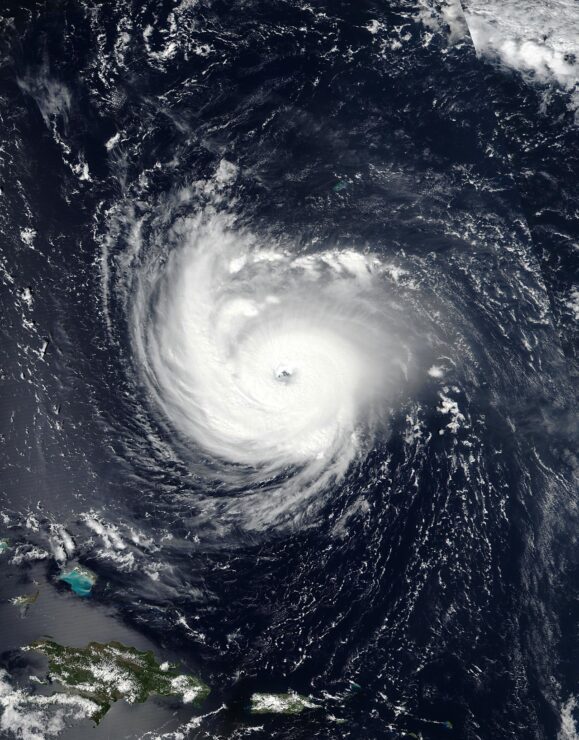
In September, 2018, Hurricane Florence (below) did significant damage to Mr. Jones’s home. He and his wife were forced to relocate to a camper. He filed a claim with GeoVera. One month later, GeoVera denied the claim, alleging that Mr. Jones’s application for coverage contained material misrepresentations. He had not disclosed the existence of the pond and he had understated the extent of the property by three acres. Mr. Jones sued Hatcher in state court, alleging negligence and gross negligence and seeking punitive damages. The trial court dismissed all claims except for breach of contract against GeoVera. Mr. Jones voluntarily dismissed that claim but appealed from the trial court’s dismissal of the other claims.
A split appellate court mostly affirmed the dismissal, but the ordinary negligence claim against Hatcher survived. Hatcher appealed based on the dissenting appellate judge’s argument that Mr. Jones was contributorily negligent by signing a blank insurance policy. Mr. Jones appealed the dismissal of his punitive damages claim, which was based on his failure to identify the conduct of any agent of Hatchet that might be an aggravating factor sufficient to justify punitive damages.
In Jones v. J. Kim Hatcher Insurance Agencies, Inc., the Supreme Court of North Carolina found that Mr. Jones’ claims for negligence can proceed. Review in these circumstances is limited to the grounds stated in the dissenting opinion, and so the Court considered whether the complaint demonstrated Mr. Jones’s contributory negligence. At the pleading stage, the Court noted “dismissal based on contributory negligence is proper only if the complaint demonstrates that the plaintiff’s own negligence proximately contributed to his injury ‘so clearly that no other conclusion can be reasonably drawn therefrom.’”
So, this is a sweet case about the duty to read. Is it negligent not to read a contract? If so, consumers everywhere are negligent. But the duty to read only applies when the consumer has an opportunity to do so and it assumes that nothing had been said or done to mislead the consumer about the nature of the agreement. The standard to avoid a determination that a plaintiff was contributory negligent as a matter a law is whether the plaintiff was reasonably “put off his guard,” a standard as fact-specific as it is folksy.
In this case, taking the facts as alleged in the complaint, Mr. Jones was put off his guard by representations from Hatcher and by their course of dealings. He was told that his coverage would be the same as he had had on a previous policy, and he knew that Hatcher’s agent had inspected and photographed the property. How was he to know that they had missed the half-acre pond and misstated his acreage?
So, I like this case for its insights on the consequences of the duty to read. The rest of it is about torts. But I know, you want to know the rest of the story, so here it is. Mr. Jones’ claim for gross negligence involving willful and wanton conduct by Hatcher survives, as contributory negligence is no ground to dismiss a claim for gross negligence. Because that claim survives, so does his claim for punitive damages. Justice Allen dissented as to contributory negligence. The Majority did not find Mr. Jones contributorily negligent as a matter of law because he received assurances relating to a prior policy. However, he entered into that prior policy in the same way — that is, he signed a one-page application form without reading it. “Negligence plus negligence does not equal reasonable care,” says the dissent.