
Fourth Circuit Remands with Questions About Enforcement of Bahamian Arbitral Award
In 2016, Employers’ Innovative Network (EIN), which provides human resource services, entered into a set of contracts with Bridgeport Benefits, Inc. (Bridgeport) and others to provide a health insurance policy to cover its employee healthcare benefit plan. The parties fell out, and EIN sued Bridgeport in 2018. After removal to federal court, Bridgeport moved to compel arbitration in Bermuda, as provided for in one of the contracts between the parties.
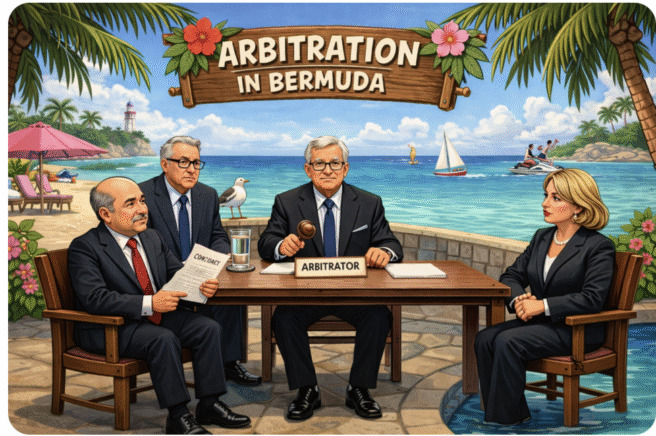
Image by ChatGPT
EIN lost in arbitration and challenged the decision, alleging that the arbiter had an undisclosed conflict of interest. The Bermuda Arbitration Institute sided with the arbiter, finding EIN’s allegations implausible. Bridgeport then returned to a West Virginia federal district court, seeking enforcement of the arbitral award pursuant to the New York Convention, also known as Chapter 2 of the Federal Arbitration Act (FAA).
The New York Convention recognizes seven grounds for refusing to enforce an international arbitral award. EIN, citing the alleged conflict of interest, relied on the public-policy defense to enforcement. The Court noted first that EIN had waived its public policy argument by not raising it with the Bermuda Supreme Court. Moreover, even if its claim were not barred, EIN did not provide sufficient evidence that the arbiter was biased.
In Employers’ Innovative Network, LLC v. Bridgeport Benefits, Inc., the Fourth Circuit agreed with EIN that it had not waived its public policy argument by not raising it with the Bermuda Supreme Court. However, it remanded the case to the District Court on a different basis: it was not able to determine, based on the “sparsely developed record” whether the New York Convention applied.
Like Chapter 1 of the FAA, Chapter 2 applies to legal relationships that are commercial in nature. Chapter 2 does not apply if both parties are citizens of the United States, unless their legal relationship “involves property located abroad, envisages performance or enforcement abroad, or has some other reasonable relation with one or more foreign states.” The Court notes that this three-tiered structure is unusual. The rest of Chapter 2 just incorporates the New York Convention, but this three-part structure is not dictated by the Convention.
The issue here is how to deal with allegations of a biased arbiter, but the rules for such matters differ in Chapters 1 and 2 of the FAA. There are defenses to enforcement of arbitral awards that apply in Chapter 1 but not in Chapter 2. One such defense is the “evident partiality” of the arbiter. Chapter 2 has no such defense; rather, it allows for the public policy argument against enforcement
Under § 202, the New York Convention does not apply if all of the parties are citizens of the United States. Here, one defendant entity is a Bermuda corporation, but it would still be a U.S. citizen if its principal place of business is in the U.S. and the location of its principal place of business is unknown, as the entity represented that its principal place of business was in Florida at one point and in Bermuda in another. On remand, the District Court will have to determine which is accurate.