
Non-Disclosure Agreements at the U.S. Supreme Court
Two weeks ago, Jodi Kantor reported in The New York Times that in November, 2024, Chief Justice Roberts (below) gathered together Supreme Court employees and demanded that they sign non-disclosure agreements (NDAs). As Jodi Kantor notes, this is little more than a formalization of the understanding of everyone who works at the Court that its deliberations and inner workings are not to be made public. Of course, the New York Times story itself suggests it appears that at least five employees have already violated the NDAs by disclosing their existence, exposing a secretive institution that cannot plug its own leaks.
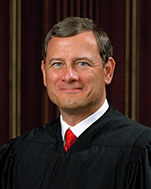
The story in The Times present the NDAs as a sign of the Court’s weakness as it struggles to restore its reputation. The Court used to rely on softer measures to insure confidentiality, but the past few years have featured a number of incidents that suggest that those measures are no longer sufficient. Indeed, Jodi Kantor duly links to stories that she herself has published that featured information leaked from Court employees.
Anybody caught leaking confidential information about the Justices deliberations could face significant professional consequences. As The Times’ story notes, Justice Scalia threatened his clerks that he would hunt them down and destroy their careers if they leaked information about the Court. Justice Barrett was one such clerk, and she issues a softer version of the same threat to her clerks. But identifying the leaker can be a challenge, and it is also not clear what penalties the Court would impose on anybody who violates the NDAs. It is hard to imagine any punishment more intimidating than Justice Scalia’s threat.
In principle, I don’t think government employees should be subject to NDAs beyond what is necessary to protect the public interest. Certainly, if Court employees think they have information of corruption, abusive behavior, or misuse of Court resources, they ought to be permitted to come forward, and they ought to be entitled to whistleblower protections regardless of what the NDA says.
However, the Justices need confidentiality if they are going to have frank exchanges of views on the matters before them, so it makes sense that their conversations with each other and with Court employees on such matters should be protected. Moreover, I find the Justices pretty unguarded in the views that they express publicly, both during oral argument and in their public appearances. Someone once shared with me a story from a friend who had interviewed with one of the Justices, now deceased. The story confirmed that the Justice held precisely the prejudices I always assumed that he had. Hearing the gossip was mildly titillating, but it did not affect my view of the Justice. And I suspect that if people who liked that Justice heard the same story, it would not affect their views of him either.
In short, I feel like I understand the workings of the Court well enough, and I trust the Joan Biskupics of the world will continue to get their inside scoops, notwithstanding the NDAs. I look forward to scholarly treatments of past Justices’ papers when those become available. I will be long dead before it will be possible to peruse the private correspondence of the current Justices. That may be a mercy.