
A Bewildering Statute of Frauds Case
Trugon Properties (Trugon) took out a $2.6 million loan from Wachovia Bank in 2005, which assigned the loan to American First Federal (AFF). Two individuals signed personal guarantees on the loan. In 2009, the borrowers were in default. AFF got a foreclosure judgment of about $2.5 mllion subject to a 25% post-judgment interest rate. In 2011 and 2012, the parties negotiated a written forbearance agreement, which they never executed. Nonetheless, borrowers resumed payments on the loan until 2020.
In 2021, AFF moved to re-set the foreclosure sale. In 2022, borrowers sought to reform the final judgment entered in the foreclosure action to “conform to the parties’ oral loan modification agreement.” In the alternative, borrowers sought to recover based on unjust enrichment.
After a bench trial, the court determined that the parties orally agreed to trim the post-judgment interest rate from 25% to 7%. The court determined that the oral agreement was enforceable notwithstanding the statute of frauds, because it could have been performed within a year. Having granted borrowers the relief they sought on their first cause of action, the court dismissed the claim for unjust enrichment.
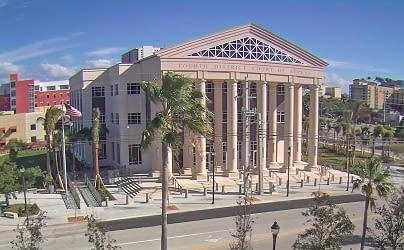
On appeal, in American First Federal, Inc. v. Trugon Properties, Inc., the Court of Appeal for the Fourth District of Florida reversed in part. Whether or not the oral agreement could be performable within a year, it was still unenforceable because, as the Court noted
Florida’s Banking Statute of Frauds expressly provides that “[a] debtor may not maintain an action on a credit agreement unless the agreement is in writing, expresses consideration, sets forth the relevant terms and conditions, and is signed by the creditor and the debtor.” § 687.0304(2), Fla. Stat. (2012).
A “credit agreement” includes an agreement to lend or forbear repayment of money. So, yeah, this needed to be in writing. Borrowers insisted that the agreement could have been performed within a year, but there was no need to consider the issue as the Banking Statute of Frauds required it to be in writing irrespective of its duration.
So, bewildering. Who enters into a long-term loan without a written agreement? And why did the trial court ignore the Banking Statute of Frauds or think it inapplicable to a contract that could be performed within a year?