
United Methodist Conference Can Sue Southern Methodist University for Changing Its Articles of Incorporation
Southern Methodist University (SMU) was incorporated in 1911. At that time, the incorporators expressed their intention that SMU be “owned, controlled and managed by” the predecessor-in-interest to the lead plaintiff in this case, the South Central Jurisdictional Conference of the United Methodist Church (the Conference). In 1916, SMU amended its charter to provide
No amendment to this charter shall ever be made unless the same shall have been first affirmatively authorized and approved by [Plaintiff’s predecessor-in-interest], or by some authorized agency of said [body].
A 1996 amendment provided, among other tings, that no amendment to the articles “shall ever be made” unless first authorized and approved by the Conference or an authorized agency thereof.
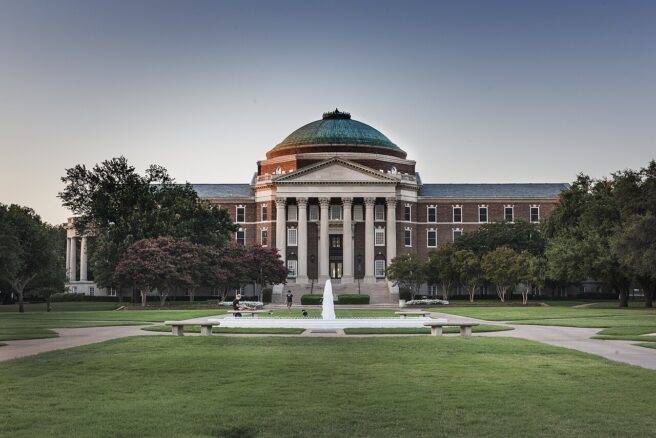
Dallas Hall on the campus of Southern Methodist University.
In 2019, doctrinal disputes arose, and some Methodist entities disaffiliated from the church. At that time, SMU’s Board of Trustees voted 34-1 to delete all references to the Conference from its charter. It did not seek the Conference’s approval of the changes. The Conference sued SMU seeking a declaration that the 2019 amendments were unauthorized and invalid and that the 1996 version of SMU’s charter is still the governing document. It alleged breach of contract and that SMU had violated state law by filing a materially false instrument of incorporation.
SMU moved to dismiss. It argued that the Conference has no authority to challenge changes to SMU’s charter and that and that there is no contract between the parties. The trial court dismissed all of the Conference’s claims, and the Conference appealed. The intermediate appellate court reinstated the Conferences’s breach of contract and false-filling claim and remanded the declaratory judgment claims to trial court. SMU petitioned the Supreme Court of Texas for review.
In Southern Methodist University v. South Central Jurisdictional Conference of the United Methodist Church, decided in June, the Supreme Court of Texas addressed three issues that SMU raised. First, SMU once again contended that the Conference lacks authority to complain of SMU’s allegedly ultra vires acts, because it is not an entity authorized to bring such suits. That is a matter of the interpretation of Texas statutes governing non-profit organizations. Suffice to say, the Court determined that the relevant statute grants Conference’s authority to sue SMU to enforce its rights under the 1996 articles of incorporation, and there is no statutory bar to the Conference’s exercise of that authority.
Second, SMU contended that its articles of incorporation do not constitute a binding contract enforceable by a nonmember. The Court held that, while its articles of incorporation are a contract, the Conference is not a party to that contract. The articles of incorporation create a contract between SMU and the State of Texas. However, the Court allows the Conference to proceed on its claim as a third-party beneficiary of that contract because SMU’s charter expressly grants the Conference contractual rights, which were “obliterated” in the 2019 revisions. By contrast, SMU’s nominal counterparty, the State of Texas, “has no involvement in the substance of the articles’ terms so long as they do not violate the law.”
Third, SMU challenged the false-filing claim. On that issue the Court sided with SMU. When SMU filed its new certificate of incorporation, it did so on advice of counsel and in the belief that it did not need to get permission from the Conference. That being the case, there was no false filing. The case is remanded to the trial court for further proceedings on the Conference’s claims for breach of contract as a third-party. beneficiary.