
The Sixth Circuit Decides a Classic Battle of the Forms
In 2021, BorgWarner PDS Irapuato (BorgWarner), an automotive supplier based in Mexico, sought an agreement to buy bonded pistons from Parker Hannifin Corporation (Parker), an Ohio Corporation. BorgWarner would use the pistons to make clutches that it would sell directly to Ford Motor Company for use in the latter’s Ohio assembly plant.

A Battle of the Forms, Image by DALL-E
In February, 2021, Parker sent a price quote. BorgWarner responded with a Letter of Intent which rejected Parker’s terms, provided its own terms, but did not seem to condition agreement on Parker’s assent to BorgWarner’s terms. Parker responded, attaching its own terms, which included language insisting that its terms applied. Most contracts literature calls this language “proviso” language or conditional lanaguage. I call it “my way or the highway acceptances,” because to be effective it has to follow a formula: my agreement is expressly conditional on your acceptance of my terms. There were more exchanges of documents, and the court does not mention if there were any terms associated with those exchanges, but neither party acquiesced to the other’s terms, and Parker started sending parts to BorgWarner.
A few months into their relationship, the parties started having disputes over price terms. Parker’s original quote had one price, but it was based on a fixed quantity. The parties later entered into a Master Agreement that had a different price and created a requirements contract. As the sales progressed, Parker reminded BorgWarner of its insistence on its own terms, which specified that price quotes were good for only sixty days. Parker provided notice in June of a pending prince increase in August. BorgWarner objected, insisting that its terms governed, and the parties continued to perform.
By January, 2022, Parker was seeking a price increase to $7.323/unit from the October 2021 price of $3.941/unit. BorgWarner refused to accept this price increase and insisted on its terms. Nonetheless, BorgWarner continued to order and Parker continued to send the pistons. In March, negotiations broke down, with each party accusing the other of breach. Each insisted that their terms should govern. BorgWarner sued first, seeking a positive injunction ordering Parker to provide pistons at BorgWarner’s price. The trial court refused to impose that injunction. Parker counterclaimed, seeking damages in accordance with its price terms.
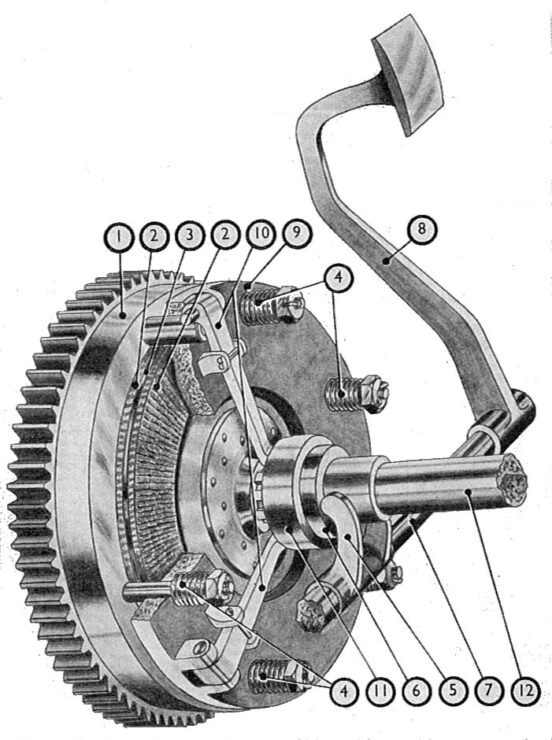
A Clutch
The trial court sided with Parker, finding that it had insisted transparently on its terms and that BorgWarner had not insisted on its terms. Both parties appealed, with BorgWarner still trying to enforce its terms and Parker seeking attorneys’ fees.
In BorgWarner PDS Irapuato S. de R.L de C.V. v. Parker Hannefin Corp., the Sixth Circuit reversed and remanded. It’s analysis begins, as it must, by trying to identify which document is the offer and which is the acceptance, which is not as simple as you might think. Parker’s original price quote, which included its my-way-or-the-highway language, looks like an offer. Price quotes traditionally are treated as invitations to offers, and there are good reasons for that. Much remained to be negotiated, and the price quotes were tentative. BorgWarner responded with a Letter of Intent, which would be a very cautious response had the price quote been an offer. The first purchase order came after months of further negotiations, and it differed significantly from the original price quote. Crucially, the price quote was based on certain quantities, but BorgWarner’s purchase orders were for requirements contracts. There could be no agreement where the parties differ on terms.
It seems like the Court is willing to treat BorgWarner’s Master Agreement as the offer, but Parker responded with its my-way-or-the-highway acceptance. In such circumstances, under UCC § 2-207(1), there is no agreement between the parties unless they perform. They did perform, and so under UCC § 2-207(3), the contract consists of the terms to which they agreed, plus whatever additional term the UCC provides. The Sixth Circuit leaves things at that, as it is not clear whether either party complied with the UCC’s requirement of reasonable notice before terminating an agreement.
Judge Davis dissents, finding that the price quote was an offer, which BorgWarner accepted by sending its purchase orders. Judge Davis’s argument hinge on traditions in the automotive industry, in which a very detailed price quotation might be treated as an offer. She notes that Parker insisted on its terms at every turn, while BorgWarner did not. Its purchase orders were thus acceptances with additional or different terms, which renders them acceptances under § 2-207(1), but because we are dealing with a my-way-or-the-highway offer, BorgWarner’s additional terms are rejected in advance under §2-207(2)(a).
I’m not really sure who has it right. I think I incline toward the majority because I’m not entirely certain which document is the offer, and the fact that the price quote lacked a clear quantity term makes me less inclined to view it as an offer. Moreover, §2-207(3) empowers a court to impose a market price where the parties have performed but dispute the price term. If the ship has not entirely sailed on the parties’ relationship, given that the court could just impose a price on them, they should be able to negotiate a price and perhaps even renew their relationship.