
No Exception to the Economic Loss Doctrine for Willful and Wanton Conduct
HIVE Construction, Inc. (HIVE) built a restaurant insured by Mid-Century Insurance Company (Mid-Century). The construction contract called for HIVE to use two layers of drywall between the restaurant’s kitchen and dining area to increase the wall’s fire-resistant qualities. Instead, HIVE installed one layer of drywall and one layer of plywood. A fire ensued in the wall, forcing the restaurant to close.
Mid-Century paid a claim out to the restaurant and then sued HIVE and the architect, alleging negligence and “willful and wanton” conduct in installing combustible wood next to the kitchen. Mid-Century settled with the architect. On the eve of trial, Mid-Century sought to amend its complaint to add a claim for breach of contract. The trial court (on the second try) denied leave to amend, and the case proceeded to trial on the negligence claim. HIVE moved for a directed verdict, arguing that the economic loss doctrine barred a claim for negligence premised on a breach of a contractual duty. As the Supreme Court of Colorado explained, under the economic loss rule, “a party suffering only economic loss from the breach of an express or implied contractual duty may not assert a tort claim for such a breach absent an independent duty of care under tort law.” The trial court found that there is an exception to the economic loss rule in cases involving willful and wanton conduct.
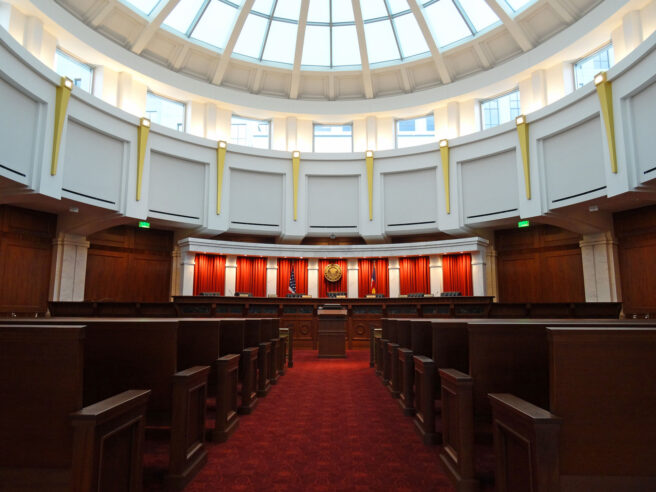
Supreme Court of Colorado, image by Jeffrey Beall, CC BY 3.0 via Wikimedia Commons
An intermediate appellate court reversed, finding that no relevant precedent supported the trial court’s finding that there is an exception to the economic loss rule in cases involving willful and wanton conduct. In Mid-Century Insurance Company v. HIVE Construction, Inc., the Supreme Court of Colorado sided with the appellate court.
The economic loss rule is pretty simple. Contracts are risk-allocation devices. The parties take on contractual duties and negotiate the level of exposure to liability with which they are comfortable. If we allowed aggrieved parties access to remedies sounding in torts for injuries that arise in contractual contexts, that risk allocation would be undercut. The court inquires into the source of the duty that has been breached, not into the scienter of the breaching party. Thus, the Court observed, Colorado has never recognized an exception to the economic loss rule for willful or wanton conduct.

There is an exception for intentional torts because such torts provide for a cause of action independent of contractual duty. But if the Court recognized an exception for willful and wanton conduct, parties would always try to get around the economic loss rule by alleging willful and wanton conduct.
It seems that Mid-Century was victimized by its own questionable litigation tactics. It could have brought a breach of contract claim arising out of the same allegations as its negligence claim. It tardily sought to do so, exposing the vulnerability of its negligence claim to dismissal based on the economic loss doctrine. The negligence claim itself identified the breached duty as one arising from the contract. We will never know whether Mid-Century could have gotten around the economic loss rule because it alleged property loss beyond economic harm. It raised that argument only on appeal, and the Court refused to address it.