
Rare Win in a COVID Business Interruption Insurance Claim
Let’s not get too excited. The claim against an insurer for breach of contract and breach of the duty of good faith and fair dealing just survived a motion to dismiss. There is still a ways to go.
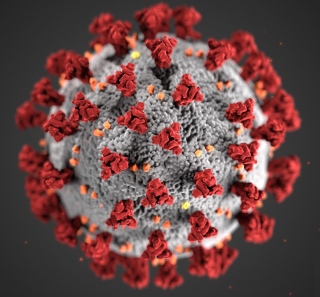
Teijin began experiencing losses due to the COVID-19 pandemic in early 2020. Reasonably enough, it alleges that there was a statistical certainty that COVID was actually present in its facilities. Teijin’s facilities were deemed “essential” and so they were not closed but access was limited, and Teijin implemented costly cleaning and disinfecction procedures. Teijin provided notice of its losses in June 2020 and again in June 2021 and February 2022. On March 15, 2022, Sompo denied coverage, claiming that the CDCE required “direct physical loss, damage, or destruction’ to property.”
Teijin filed suit in 2024, alleging breach of contract, breach of the duty of good faith and fair dealing, and statutory claims. Sompo responded with a motion to dismiss. On March 26, 2025, the District Court for the Middle District of North Carolina denied that motion in Teijin Automotive Technologies NA Holding Corp. v. Sompo America Insurance Company.
The opinion begins with some discussion of choice of law and Sompo’s argument that the claim is untimely. The Court did not find it necessary to decide either issue at this stage, in part because the challenge to the timeliness of the claim was waived for the purpose of the motion to dismiss.

On the merits, the parties parsed the language of the CDCE differently. Sompo conceded the actual presence of COVID at the Tiejin facilities but argued that the orders that were issued by the government or by Teijin officers did not qualify to trigger coverage under the policy. With respect to both government regulations and orders by Teijin officers, the Court disagreed.
Having denied the motion to dismiss with respect to breach of contract, the Court also denied the motion with respect to the duty of good faith and fair dealing. The statutory claims also survived in a complex analysis that takes us beyond the scope of this Blog.
Why is this case different from [almost] all other COVID cases decided under all risks insurance policies. The key language in those policies requires “direct physical loss or damage” caused by the presence of COVID in the workplace. As discussed most recently here, courts are reluctant to recognize actual, physical damage to property that cannot be seen with the naked eye. That language was not included in the CDCE. Teijin was thus able to take the road less travelled by, and that has made all the difference.