
Friday Frivolity: Larry David and What We Owe to Each Other
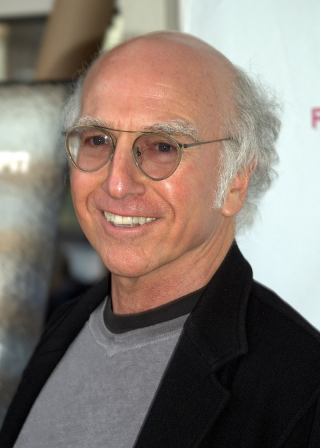
I am a great fan of Larry David’s prior creation, Seinfeld, and it is a great source of teaching hypos. The George character from Seinfeld was based on Larry David. Jason Alexander, who played George, started off playing him as a kind of early Woody Allen style nebbish. It was only when Larry revealed that the wholly unbelievable predicaments in which George found himself were in fact drawn from Larry’s experiences as someone who navigates human existence without a reliable user’s manual. The journey continues in Curb Your Enthusiasm.
The second episode is typical. Larry goes bowling with his wife (played by Cheryl Hines) and Ted Danson and Mary Steenburgen, who play themselves. When Larry goes to collect his shoes, he learns that they have been given to someone else by mistake. The next day, Larry goes shopping with Mary Steenburgen. It’s not clear that he understands why he is doing this, but he is very taken with Mary Steenburgen and wants to spend more time with her. They go into a shoe store, and it occurs to Larry that he can replace the shoes that he lost at the bowling alley. A salesman finds the shoes that Larry is looking for, but they don’t have his size. The salesman offers to order a pair. Larry is agreeable.
Soon thereafter, the bowling alley calls. The guy with Larry’s shoes has returned, and Larry is able to recover his lost shoes. I had to suspend disbelief about a lot of things in connection with that exchange. Why would someone take someone else’s shoes at a bowling alley? Having done such a thing, why would they return to the scene of the crime? What would motivate the bowling alley to bring together shoe thief and victim? Why would the shoe thief, when confronted, just shrug as the victim unlaces the shoes and peels them off the feet of the thief? I decided to follow Jason Alexander’s model and just roll with it. Things that seem like they could not possibly have happened in real life may well have happened to Larry David.
Similarly improbably, Larry runs into the shoe salesman on the street, and the latter assures him that the shoes are coming in. Larry tells the salesman that he no longer needs the shoes. The salesman is irate. He did Larry a favor by ordering this shoes and not taking a deposit. He gets paid by commission. Larry is understandably taken aback at the salesman’s furor, which is a bit over-the-top. Larry offers to pay the salesman the commission, which only angers him further, and the salesman walks off in a huff.
I would never show my face in that store again, but I am not Larry David. As things with Mary Steenburgen did not turn out as he had hoped, he now wants to return something else that he bought that day. The salesman is right there and wants to prevent Larry from returning the goods.
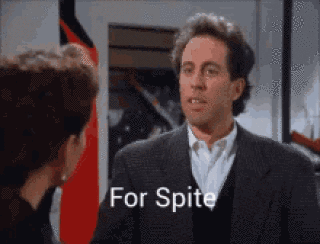
Of course, this is a sale of goods. Technically, the seller can refuse a refund if the goods are conforming, and they are. However, the store likely has a return policy, because that’s just a smart business practice. According to Seinfeld, you cannot return goods out of spite, but in most stores you can, but you probably shouldn’t highlight that as the reason for the return.
But I return to the vexing question of what we owe each other. As a legal matter, Larry owes the salesman nothing. As an ethical matter, I read T.M. Scanlon to suggest that Larry owes a duty to treat others in a way that they, behaving reasonably, would find acceptable. The salesman is outraged not because he lost a sale but because he wasn’t respected. Larry’s offer to pay him a commission was a still greater insult, turning the salesman into (his terms) a “shoe whore.” Even though the relationship between shoe buyer and shoe seller is commercial in nature, we expect to be treated as something more than vehicles for exchange.
I’m no ethicist, but I think Larry owed the salesman an apology and a sincere representation that he would return to the store and make another purchase to make up for the one that had fallen through. Or, because the character “Larry David” is also the real Larry David who made a fortune on Seinfeld, Larry could just go through with the purchase and have a spare pair of shoes that he likes, or he could donate the shoes to a worthy cause. He’s so rich he could just throw them away, but that decision too would have ethical ramifications. Of course, all of this imagines people behaving reasonably, and the premise of Curb Your Enthusiasm seems to be the opposite.