
Friday Frivolity: Second Circuit Vacates Sentence of OpenSea Employee
I don’t know what I hate more, white-collar crime or non-fungible tokens (NFTs). This case involves the latter and allegations of the former. We’ve been writing in this space since 2021 that NFTs are mostly worthless. Typically, they convey no valuable property rights. Bored Apes are a partial exception,* That said, you can make a lot of money or lose a lot of money trading in NFTs. People want them, and they will pay a lot of money to own them. Even now! They trade on interest, not on intrinsic value. That means that the way to make an NFT valuable is to get a lot of people interested in owning it. And if you could somehow control which NFTs get noticed, buy them before they get noticed, and then sell them once the price jumps because they are suddenly as exciting as a Labubu doll, you could make a lot of money.
One really good way for NFTs to get noticed is for them to be featured on OpenSea, an important online marketplace for NFT trading. Nathanial Chastain curated OpenSea’s homepage. A jury convicted Mr. Chastain for wire fraud and money laundering for having bought fifteen NFTs before posting them on OpenSea’s homepage and then selling them after the price jumped, netting $57,000. A rather modest scam, but it still looks an awful lot like insider trading. He was sentenced to three months’ imprisonment and three years of supervised release. So a modest sentence for a modest crime. Seems like a balanced result.

The jury heard testimony that OpenSea had reason to believe that it would suffer reputational harm if its users knew of Mr. Chastain’s conduct. Indeed, some users figured out what Chastain was up to, and they didn’t like it. They complained, and OpenSea fired Mr. Chastain. It seems like a jury could have found that OpenSea had a property interest in the confidentiality of the NFTs. OpenSea gets a 2.5% commission on every item it sells, and if people think the deck is stacked in favor of OpenSea insiders, it stands to reason that they will look to spend their money elsewhere.
There is some discussion in the Second Circuit opinion of evidence that Mr. Chastain sought to introduce relating to the possibility that the principals behind OpenSea were also ethically challenged. The District Court excluded the evidence because it did not seem relevant to Chastain’s guilt or innocence, and that seems largely correct. The difficulty was that the company did not seem entirely certain what information was to be considered “confidential.” And so, I suppose, a jury could have found that OpenSea didn’t really mind that Mr. Chastain had a side hustle that involved exploiting information he got from the company. Echoes of Chiarella v. United States? Except, of course, NFTs aren’t securities.
The District Court instructed the jury that it could convict Mr. Chastain of wire fraud even if the confidential information relating to the NFTs in which he traded had no commercial value to OpenSea. That was error. The wire fraud is not about punishing all unethical behavior in a commercial setting. Even breach of a fiduciary duty is not enough.
So there was error. The error was not harmless because, the Court explains, the government introduced evidence from which a jury could have concluded that “the featured NFT information was so tangential to OpenSea’s business that it lacked commercial value to the company.” That is, there was no mechanism in place to choose which NFTs were featured. Mr. Chastain just spoke with some of his colleagues and picked whatever NFTs he deemed interesting. OpenSea made the same 2.5% commission regardless of which NFT Mr. Chastain chose. Moreover, while OpenSea argued that if Mr. Chastain’s actions were known it would harm OpenSea’s reputation, the government presented no evidence on that subject, and the Court deemed an “abstract reputational harm” too “ethereal” to count as a traditional property interest. There is case law to support this, but I find it mind-boggling. Since when is a company’s good will value not a property interest? Still, there was evidence from the jury’s notes to the District Court judge that it did not think a property interest was implicated.
As the wire fraud count was a predicate to the money laundering count, both convictions must be vacated. A retrial is possible, and so the Second Circuit reviewed numerous evidentiary rulings that Mr. Chastain challenged and found that the District Court had not abused its discretion in connection with those rulings.
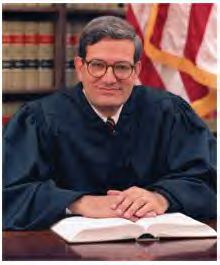
OpenSea had the exclusive right to information relating to the NFTs that it put up for sale. That property interest in information was violated. Under a subsequent case, Ciminelli, there must be a traditional property interest, but the property interest in the NFTs is one, and there is no additional requirement that the property interest must have “commercial value.” In Judge Cabaranes’ view, the District Court appropriately instructed the jury that it could convict if Mr. Chastain “conducted himself in a manner that departed from traditional notions of fundamental honesty and fair play in the general and business life of society.”
*I understand that the Bored Apes come with certain intellectual property rights, including the rights to use the Apes in adaptations. Seth Green created an animated television series, White Horse Tavern, with some of his NFTs, but when I tried to see the result, I mostly just came across stories about how his NFT wallet had been phished and he had to pay $300,000 to recover the NFTs that he needed for the show. Below is the trailer for the show. The reviews are not favorable. I couldn’t find much else about the show. In short, it seems that nobody has successfully monetized the property rights in an NFT beyond just re-selling the NFT. Also, I don’t get it. Why did Seth Green had to get back his original NFTs? Can’t you just generate new bored apes with readily available software? Create a new one, make it into an NFT if you must, but why even bother, and then use your freely created bored ape in your show.