
Friday Frivolity: Nice v. Fun Markets; Clean Sports v. Dope Sports
Matt and Katie suggest that there could be nice markets, regulated by law, and fun markets, where everyone enters with eyes open. Fun markets are unregulated, with all the attendant risks, and the game is to make money and get out before you get taken. This is a theme to which they return with regularity. Irrational markets, such as meme stocks, can look like they spike based on manipulation. But perhaps it’s not about manipulation. People flock to meme stocks because they are playing a game, while enjoying being part of a larger phenomenon and enjoying the camaraderie of trolling Wall Street traders.
Ages ago, there were things called “Big Boy Letters,” in which the parties to a transaction, with reason to believe that the seller was in possession of inside information, promised not to sue or seek to unwind the transaction. Around the same time, parties were seeking ways around fiduciary duties. I have not continued to follow developments in this area since I stopped teaching Business Associations. It is possible that the 2008 meltdown reminded people that fiduciary duties serve an important purpose. In any case, Big Boy Letters and business entities in which the officer and directors owe no fiduciary duties to the firm’s constituents strike me as something akin to fun markets. My recollection is that the Delaware courts came down pretty hard on entities that tried to dispose of fiduciary duties entirely. Maybe it will fly in Texas.

If you read their materials (they have a “Declaration on Human Enhancement”), you will see the familiar moves of the Silicon Valley boy geniuses and their ilk who have “done their own research” and concluded that they know better than all of the conventional “experts.” They celebrate the disgraced athletes who had their world record achievements stricken once the world learned that they had achieved them with the assistance of performance-enhancing drugs; that is, by what the rest of the world calls “cheating.”
Sensitive to potential criticisms, the Enhanced Games involves a lot of monitoring (“medical profiling”) to make sure that it is safe for them to compete. Awww! That sounds like regulation. Might as well subject yourself to the anti-doping Gestapo at that point. But no, it’s a bit different. The Enhanced Games folks are really interested in collecting data on the possibility for producing improved humans, so it is more like controlled medical experimentation on human subjects. But it’s fine because it’s voluntary. And it’s voluntary because the rich guys behind the project will pay the participants much more than they could make in clean competition.
Which brings me back to Matt Levine’s description of what really is going on in the world of blockchain-based business models. Matt imagines a world in which we can do some things with blockchain that we couldn’t do without it. There is still regulation, but it is more lax, giving the participants some latitude to experiment. I think we tried this in professional cycling in the era of the Tour de Lance. It certainly wasn’t clean sports, but it wasn’t dope sports either. It was a sort of double competition to see who could become the best cyclist by using performance-enhancing drugs without getting caught by the regulators.
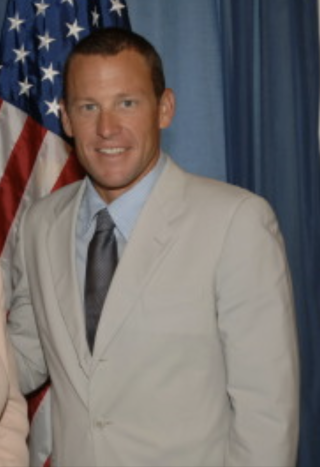
One might feel bad for the athletes who raced clean in that era, but it’s hard to imagine that there were many among the top cyclists. Cyclists weren’t doping on their own. The teams coordinated the doping, and cyclists switched teams. Everyone involved in the sport must of learned of the doping regimens and the tricks for evading detection. It is hard to imagine that they did not try to emulate the practices of the most successful teams.
If I’m right about all that, the cyclists were steering between the Scylla of detection and the Charybdis of the serious health risks attendant to performance-enhancing drugs. Cyclists had been doping since the nineteenth century. Each cyclist was likely familiar with the list of cyclists who died young and whose deaths had been linked to the use of performance enhancing drugs. In that era, Lance was the most successful at this double competition, pushing himself the hardest while evading detection and not giving himself a heart attack or a stroke. It is a unique athletic achievement. I cannot celebrate it, but I remain awed.
And this is, I think, the world that people experimenting with blockchain trading and blockchain entities are navigating today. Sometimes the risks are too great and their investments crash and burn. Sometimes, they veer off into illegalities so glaring that the regulators wake up and prosecute. But those most skilled at this hybrid game can become legends, for those as impressed by money-making as I am by riders who conquer the Alpe D’Huez.